Astronomers recently announced that the former planet Pluto has lost its planet status. Why? Basically it's too small, so now it'll be called a dwarf. Poor Pluto. Poor kids. Just think of all those textbooks that'll have to be changed now, to say nothing of all the old science fiction stories that have anything at all to do with Pluto. At least we won't have to eliminate a movement from Holst's The Planets. (Pluto hadn't been discovered when he wrote the suite between 1914 and 1916.)
But are any of us really safe? Watch out, Rhode Island: somebody might take away your statehood and declare you a "district." And how about the country Monaco? At 0.7 square miles, it might now be called a city. Maybe even a town or a village.
What about writers? Since I've only had a couple of short stories published, do I still get called a writer?....
Look out....
Friday, August 25, 2006

Thursday, August 24, 2006
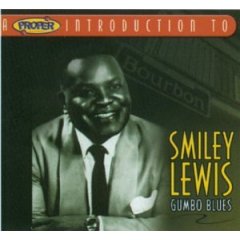
Smiley's People
The best part about listening to Bob Dylan's Theme Time Radio Hour on XM Radio (other than listening to Bob pontificate) is hearing music you wouldn't normally hear anywhere else. A few weeks ago, Dylan played a song called "Too Many Drivers" by Smiley Lewis. I liked Smiley's barrelhouse voice and thought that if "Too Many Drivers" was a good R&B tune, Smiley probably had lots of others. I filed the information under "To be further pursued (opportunity and funds pending)."
When I was in Daedalus Books & Music (one of my favorite haunts) awhile back, I noticed several CDs on the Proper Records label, a British label that specializes in affordable introductory compilations of artists like Howlin' Wolf, Cab Calloway, Ella Fitzgerald, B.B. King, T-Bone Walker, Clifford Brown, Lester Flatt & Earl Scruggs, Hank Snow, Charley Patton and a whole slew of others (including my favorite name, Bull Moose Jackson). And there was Smiley, grinning at me from the racks, telling me that at $6.98, Gumbo Blues was a no-brainer.
It was a good decision. The twenty-four tracks on the disc (all recorded between 1950 and 1953) highlight Smiley's belt-it-out voice in a variety of styles. Most of the tunes are a hybrid of straight blues and rock, the early days of R&B. Smiley was from the New Orleans area and you can hear bits of Cajun, jazz, boogie-woogie and other styles throughout his music. Lewis does some nice guitar work, backed by some great sidemen including Tuts Washington on piano, Joe Harris on alto sax and Ernest McLean on guitar. These tunes remind me of Fats Domino (another New Orleans native who was a contemporary of Smiley's), but with more variety and depth. More than anything else, they're a lot of fun.
The liner notes (about three pages of text) provide the basic background on Lewis and his life. While a local New Orleans hit, Lewis never attracted the national attention he deserved. (The huge popularity of Fats may have had something to do with that.) But if you're a fan of early rock, R&B, soul, or just like to have a fun listening experience, Smiley's your man. Check him out.
When I was in Daedalus Books & Music (one of my favorite haunts) awhile back, I noticed several CDs on the Proper Records label, a British label that specializes in affordable introductory compilations of artists like Howlin' Wolf, Cab Calloway, Ella Fitzgerald, B.B. King, T-Bone Walker, Clifford Brown, Lester Flatt & Earl Scruggs, Hank Snow, Charley Patton and a whole slew of others (including my favorite name, Bull Moose Jackson). And there was Smiley, grinning at me from the racks, telling me that at $6.98, Gumbo Blues was a no-brainer.
It was a good decision. The twenty-four tracks on the disc (all recorded between 1950 and 1953) highlight Smiley's belt-it-out voice in a variety of styles. Most of the tunes are a hybrid of straight blues and rock, the early days of R&B. Smiley was from the New Orleans area and you can hear bits of Cajun, jazz, boogie-woogie and other styles throughout his music. Lewis does some nice guitar work, backed by some great sidemen including Tuts Washington on piano, Joe Harris on alto sax and Ernest McLean on guitar. These tunes remind me of Fats Domino (another New Orleans native who was a contemporary of Smiley's), but with more variety and depth. More than anything else, they're a lot of fun.
The liner notes (about three pages of text) provide the basic background on Lewis and his life. While a local New Orleans hit, Lewis never attracted the national attention he deserved. (The huge popularity of Fats may have had something to do with that.) But if you're a fan of early rock, R&B, soul, or just like to have a fun listening experience, Smiley's your man. Check him out.
Tuesday, August 22, 2006
Back in Town
It's good to be home. It's also good to see my mom moved from ICU to a regular hospital room on Sunday. She should be discharged possibly as early as tomorrow, after which she'll have about 6 weeks of physical therapy. We never would have thought such a thing possible several days ago. Thanks to everyone for their prayers, thoughts and best wishes.
*************************
As you can imagine, I wasn't able to concentrate much on writing, although I made a few notes on some of the stories I'm working on.
I was able to do a bit of reading, reading over a dozen short stories and one novel, Jonathan Lethem's excellent Gun, with Occasional Music.
ICU visiting hours left a large three-hour gap in each day that I filled by visiting the local Borders and the Half-Price Books in Mesa. Found some pretty good stuff at Half-Price including A Saucer of Loneliness: Vol. VII of the Complete Stories of Theodore Sturgeon and yes, the very first installment of The Year's Best Fantasy (before "Horror" officially entered into the title).
I also picked up a current genre magazine at Borders. No, I won't tell you what it was, but it wasn't F&SF. (I finished the September issue on the initial flight to Chicago.) The magazine I bought is one I've bought before - a mag you'd probably recognize - but I hadn't read it in out two years. I thought the first story was okay, but a weak choice for the lead story. The second - also okay, but that's all. The more I read, the more my disappointment level rose. "I know I can write as well as some of these people," I told myself. Then I read Ursula K. LeGuin's "Buffalo Gals, Won't You Come Out Tonight" from TYBF. Okay, I can't write like that! But I'd sure shoot for LeGuin's level any day.
Maybe those stories I read in the mag are the best stories they receive. (I sure don't know why they'd withhold the good stuff.) Maybe my stories aren't as good as theirs, but I think mine can at least compete. Anyway, it gives me hope...until I read LeGuin, that is.
Now Reading = James Tiptree, Jr.: The Double Life of Alice B. Sheldon - Julie Phillips
Now Playing = The Complete Recordings - Robert Johnson
*************************
As you can imagine, I wasn't able to concentrate much on writing, although I made a few notes on some of the stories I'm working on.
I was able to do a bit of reading, reading over a dozen short stories and one novel, Jonathan Lethem's excellent Gun, with Occasional Music.
ICU visiting hours left a large three-hour gap in each day that I filled by visiting the local Borders and the Half-Price Books in Mesa. Found some pretty good stuff at Half-Price including A Saucer of Loneliness: Vol. VII of the Complete Stories of Theodore Sturgeon and yes, the very first installment of The Year's Best Fantasy (before "Horror" officially entered into the title).
I also picked up a current genre magazine at Borders. No, I won't tell you what it was, but it wasn't F&SF. (I finished the September issue on the initial flight to Chicago.) The magazine I bought is one I've bought before - a mag you'd probably recognize - but I hadn't read it in out two years. I thought the first story was okay, but a weak choice for the lead story. The second - also okay, but that's all. The more I read, the more my disappointment level rose. "I know I can write as well as some of these people," I told myself. Then I read Ursula K. LeGuin's "Buffalo Gals, Won't You Come Out Tonight" from TYBF. Okay, I can't write like that! But I'd sure shoot for LeGuin's level any day.
Maybe those stories I read in the mag are the best stories they receive. (I sure don't know why they'd withhold the good stuff.) Maybe my stories aren't as good as theirs, but I think mine can at least compete. Anyway, it gives me hope...until I read LeGuin, that is.
Now Reading = James Tiptree, Jr.: The Double Life of Alice B. Sheldon - Julie Phillips
Now Playing = The Complete Recordings - Robert Johnson
Saturday, August 19, 2006
Arizona Update
Thanks to everyone for your emails, comments, thoughts and prayers. My mom came through the surgery as well as can be expected and is on the slow road to recovery. She's in excellent hands at Banner Baywood Heart Hospital in Mesa, AZ. Again, recovery will be very slow, so we're taking it one day at a time. I'll be staying a couple of more days before heading back to Maryland, then will probably come back to Arizona sometime later.
Thursday, August 17, 2006
Monday, August 14, 2006
Sunday, August 13, 2006
Ravens/Books/Little Miss Sunshine/Free Books
An excellent weekend started off Friday night with my good friend Jim inviting me to the Baltimore Ravens pre-season opener against the much-hated New York Football Giants. As soon as I saw Eli Manning take the field, I was immediately reminded of many memorable games between Manning's alma mater Ole Miss and my brother's alma mater Mississippi State. (For those of you interested in measuring time, I'm here to inform you that the nanosecond is not the smallest unit of measure. It is, rather, the subatomic interval between the "amen" of the invocation and the first chant of "Go to hell, Ole Miss.")
It was my first time in the Ravens' stadium and I must admit it's a first-rate facility. The game was pretty good too – McNair's opening drive was exceptional for a pre-season game, although I'm sure coach Brian Billick's blood pressure suffered when McNair decided to leap for the opening touchdown himself. Despite heroics and a pretty good running game, the Ravens fell to the Giants 17-16. But Jim and I had a great time.
Two books arrived Saturday, James Tiptree, Jr.: The Double Life of Alice B. Sheldon by Julie Phillips and Shriek: An Afterword by Jeff VanderMeer. Can't wait to start each of them.
Saturday Cindy and I went to the new, improved Baltimore Book Thing. For those of you who don't know, The Book Thing is a location (you can't really call it a "store") that gives away books. That's right, the books are free.
I know what you're thinking. They're all Readers Digest books and such. Not so. I've found signed first editions at The Book Thing, current bestsellers, hard-to-find titles, you name it. It's an incredible place that you have to see to believe. If you're ever in the Balto area on a Saturday or Sunday, check it out.
On to see our friends Juan and Kathleen for a showing of Little Miss Sunshine at the Charles Theatre. If you haven't seen the film, go. Now. Everyone's going to be talking about it and rightfully so. Cindy and I thoroughly enjoyed it. (More on the film later.)
Weekend's almost over. Time to get a little writing done. Everybody have a great week.
It was my first time in the Ravens' stadium and I must admit it's a first-rate facility. The game was pretty good too – McNair's opening drive was exceptional for a pre-season game, although I'm sure coach Brian Billick's blood pressure suffered when McNair decided to leap for the opening touchdown himself. Despite heroics and a pretty good running game, the Ravens fell to the Giants 17-16. But Jim and I had a great time.
Two books arrived Saturday, James Tiptree, Jr.: The Double Life of Alice B. Sheldon by Julie Phillips and Shriek: An Afterword by Jeff VanderMeer. Can't wait to start each of them.
Saturday Cindy and I went to the new, improved Baltimore Book Thing. For those of you who don't know, The Book Thing is a location (you can't really call it a "store") that gives away books. That's right, the books are free.
I know what you're thinking. They're all Readers Digest books and such. Not so. I've found signed first editions at The Book Thing, current bestsellers, hard-to-find titles, you name it. It's an incredible place that you have to see to believe. If you're ever in the Balto area on a Saturday or Sunday, check it out.
On to see our friends Juan and Kathleen for a showing of Little Miss Sunshine at the Charles Theatre. If you haven't seen the film, go. Now. Everyone's going to be talking about it and rightfully so. Cindy and I thoroughly enjoyed it. (More on the film later.)
Weekend's almost over. Time to get a little writing done. Everybody have a great week.
Wednesday, August 09, 2006
Shameless Self-Promotion
Inclinations has just bought and published my story "Results May Vary." You can read it here.
Monday, August 07, 2006

The Weekend
Cindy and I babysat our niece Sarah Saturday night and had a really good time. (Really.) I read two books to Sarah - The Foot Book (which she liked) and Tickle the Duck (which she really liked). I also brought along City of Saints and Madmen, but figured maybe that was a little much...
Got a rejection from Asimov's for "You Can Say Anything You Want." The ending (among other things) needed some work, so I spent part of the weekend making it (hopefully) stronger. Now to send it somewhere else...
I also finished True History of the Kelly Gang by Peter Carey. It's the fictionalized story of the Australian outlaw Ned Kelly. I thought the first half of the book was stronger and more interesting than the second half, but I'd recommend it.
As mentioned above, I started Jeff VanderMeer's City of Saints and Madmen (without Sarah). VanderMeer's writing is just incredible, as are his ideas. His new novel Shriek releases tomorrow, although I seriously doubt I'll have City of Saints finished by then. But has that ever stopped me from placing an order? Anyone who knows me at all knows the answer to that one.
Got a rejection from Asimov's for "You Can Say Anything You Want." The ending (among other things) needed some work, so I spent part of the weekend making it (hopefully) stronger. Now to send it somewhere else...
I also finished True History of the Kelly Gang by Peter Carey. It's the fictionalized story of the Australian outlaw Ned Kelly. I thought the first half of the book was stronger and more interesting than the second half, but I'd recommend it.
As mentioned above, I started Jeff VanderMeer's City of Saints and Madmen (without Sarah). VanderMeer's writing is just incredible, as are his ideas. His new novel Shriek releases tomorrow, although I seriously doubt I'll have City of Saints finished by then. But has that ever stopped me from placing an order? Anyone who knows me at all knows the answer to that one.
Saturday, August 05, 2006
A Couple of "Best Of" Encounters
Cindy and I decided to slide on over to our state capitol yesterday (Annapolis, for those of you outside the Kingdom of Maryland) and check out two of the places named "Best Of" in...oh, I don't know, some magazine we picked up somewhere....
The wings at Acme Bar & Grill on Main Street were quite good, certainly deserving of the "Best Wings in Annapolis" title. The wings come in fifteen flavors and are served regular, hot, extremely hot, and insane. I wimped out and ordered "hot" which had just a little kick to them. (Next time I'll punch it up a notch.) It's a tiny place that also features live music at night. In such a tight room, I hope it's two thin girls playing piccolo duets.
Just down the road, Storm Brothers Ice Cream was, I must admit, a bit of a let-down. There were plenty of flavors to choose from (I picked pralines and cream), and the prices weren't bad, but the ice cream didn't seem much better than what you could get anywhere else. Maybe I should go back and pick, say, seventeen or eighteen other flavors. To be fair, ya know.
Speaking of "Best of"s, in an effort to slowly turn Cindy into a spec fic fanatic, I twisted her arm to read two stories from Science Fiction - The Best of 2003: Jeffrey Ford's "The Empire of Ice Cream," which she enjoyed (despite our not-so-best-of ice cream experience of the day before), and "Only Partly Here" by Lucius Shepard, which she didn't care for. Oh well, Lucius is an acquired taste, I suppose. I'll bet Lucius would go for some insane wings...
The wings at Acme Bar & Grill on Main Street were quite good, certainly deserving of the "Best Wings in Annapolis" title. The wings come in fifteen flavors and are served regular, hot, extremely hot, and insane. I wimped out and ordered "hot" which had just a little kick to them. (Next time I'll punch it up a notch.) It's a tiny place that also features live music at night. In such a tight room, I hope it's two thin girls playing piccolo duets.
Just down the road, Storm Brothers Ice Cream was, I must admit, a bit of a let-down. There were plenty of flavors to choose from (I picked pralines and cream), and the prices weren't bad, but the ice cream didn't seem much better than what you could get anywhere else. Maybe I should go back and pick, say, seventeen or eighteen other flavors. To be fair, ya know.
Speaking of "Best of"s, in an effort to slowly turn Cindy into a spec fic fanatic, I twisted her arm to read two stories from Science Fiction - The Best of 2003: Jeffrey Ford's "The Empire of Ice Cream," which she enjoyed (despite our not-so-best-of ice cream experience of the day before), and "Only Partly Here" by Lucius Shepard, which she didn't care for. Oh well, Lucius is an acquired taste, I suppose. I'll bet Lucius would go for some insane wings...
Friday, August 04, 2006
The Scratching of the Head of Lot 49 (Spoilers)
I finished reading Thomas Pynchon's The Crying of Lot 49 a couple of days ago and it's fair to say I've been thinking about it ever since. It was my first encounter with Pynchon. I certainly don't plan to read his entire output (which is only seven books), but I'll probably read at least one more, maybe his new book.
So much has been written both about The Crying of Lot 49 and the elusive, ultra-private Pynchon* that I can only add my own stumbling thoughts.
This probably flies in the face of literary scholarship, but if The Crying of Lot 49 were a genre novel, I'd say it was a quest story. Oedipa travels to Southern California to settle the estate of her former boyfriend, meeting several trials, tribulations and dangers along the way. When she arrives, the purpose of the quest has changed – wildly – but her determination is unshaken. Maybe I'm just flat-out wrong, but I couldn't get the quest theme out of my mind. That way of looking at the novel didn't diminish it for me, however. Just the opposite.
The short novel (183 pages in my edition) is jam-packed with paranoia, conspiracy, sex, drugs, rock n roll, communication (and the lack of), entropy, scientific experimentation, deception, corporate greed, puns, psychology, underground networks, and enough cultural references to delight flower children of all ages. All of which is fascinating, but the first thing that struck me about the book is Oedipa's relationship with men.
All through the book, every man Oedipa encounters either disappoints, dupes or uses her in some way. In fact, the entire scheme beginning with the very first letter from her former lover Pierce might be an elaborate hoax. It seems that Pynchon's choice of a female protagonist constantly coming into contact with weak/powerless/deceitful men reaches far beyond any generic postmodern interpretation. She doesn't trust these men (I keep thinking of the multi-layered clothing in the strip game with Metzger), but time after time, she has no choice but to helplessly embrace the information given her by men. Is there no way out?
There's so much to be fascinated about in the novel. It's very possible that the whole journey is a monumental joke played on Oedipa, who – although distracted from her original purpose – is simply looking for answers.
Pynchon seems to be saying that there aren't any answers, that this whole existence is a joke, a universe without meaning. A funny joke, to be sure, at least as long as the quest is going on – depending on whom you ask. (Certainly not Oedipa.) The Crying of Lot 49 came out in 1966, a time ripe with conspiracy theories, paranoia and all the rest. I am interested in reading at least one more Pynchon novel to see if he still appears to embrace the same postmodern world-view posited here. But I have other questions as well.
No one knows whether Pynchon is a complete recluse or if he has personal relationships with people who don't know who he really is. I hope the latter, but from reading the novel, I suspect the former. What do you do with your life for forty years? Okay, write novels, but what else? Is paranoia a huge part of his life? Is personal communication with others something Pynchon feels is impossible? Pointless? Maybe he's playing the same joke on us that's been played on Oedipa. Or maybe he's the one sitting at the auction waiting for answers that will never come. Something to think about.
* "the man simply chooses not to be a public figure, an attitude that resonates on a frequency so out of phase with that of the prevailing culture that if Pynchon and Paris Hilton were ever to meet — the circumstances, I admit, are beyond imagining — the resulting matter/antimatter explosion would vaporize everything from here to Tau Ceti IV." – Arthur Salm in the San Diego Union-Tribune, February 8, 2004
So much has been written both about The Crying of Lot 49 and the elusive, ultra-private Pynchon* that I can only add my own stumbling thoughts.
This probably flies in the face of literary scholarship, but if The Crying of Lot 49 were a genre novel, I'd say it was a quest story. Oedipa travels to Southern California to settle the estate of her former boyfriend, meeting several trials, tribulations and dangers along the way. When she arrives, the purpose of the quest has changed – wildly – but her determination is unshaken. Maybe I'm just flat-out wrong, but I couldn't get the quest theme out of my mind. That way of looking at the novel didn't diminish it for me, however. Just the opposite.
The short novel (183 pages in my edition) is jam-packed with paranoia, conspiracy, sex, drugs, rock n roll, communication (and the lack of), entropy, scientific experimentation, deception, corporate greed, puns, psychology, underground networks, and enough cultural references to delight flower children of all ages. All of which is fascinating, but the first thing that struck me about the book is Oedipa's relationship with men.
All through the book, every man Oedipa encounters either disappoints, dupes or uses her in some way. In fact, the entire scheme beginning with the very first letter from her former lover Pierce might be an elaborate hoax. It seems that Pynchon's choice of a female protagonist constantly coming into contact with weak/powerless/deceitful men reaches far beyond any generic postmodern interpretation. She doesn't trust these men (I keep thinking of the multi-layered clothing in the strip game with Metzger), but time after time, she has no choice but to helplessly embrace the information given her by men. Is there no way out?
There's so much to be fascinated about in the novel. It's very possible that the whole journey is a monumental joke played on Oedipa, who – although distracted from her original purpose – is simply looking for answers.
Pynchon seems to be saying that there aren't any answers, that this whole existence is a joke, a universe without meaning. A funny joke, to be sure, at least as long as the quest is going on – depending on whom you ask. (Certainly not Oedipa.) The Crying of Lot 49 came out in 1966, a time ripe with conspiracy theories, paranoia and all the rest. I am interested in reading at least one more Pynchon novel to see if he still appears to embrace the same postmodern world-view posited here. But I have other questions as well.
No one knows whether Pynchon is a complete recluse or if he has personal relationships with people who don't know who he really is. I hope the latter, but from reading the novel, I suspect the former. What do you do with your life for forty years? Okay, write novels, but what else? Is paranoia a huge part of his life? Is personal communication with others something Pynchon feels is impossible? Pointless? Maybe he's playing the same joke on us that's been played on Oedipa. Or maybe he's the one sitting at the auction waiting for answers that will never come. Something to think about.
* "the man simply chooses not to be a public figure, an attitude that resonates on a frequency so out of phase with that of the prevailing culture that if Pynchon and Paris Hilton were ever to meet — the circumstances, I admit, are beyond imagining — the resulting matter/antimatter explosion would vaporize everything from here to Tau Ceti IV." – Arthur Salm in the San Diego Union-Tribune, February 8, 2004
Sunday, July 30, 2006
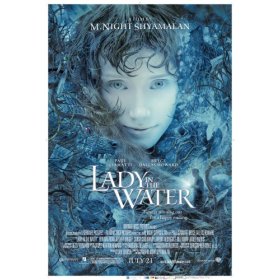
They Only Come Out at M. Night (Spoilers)
After weeks of bemoaning the fact that we never see any movies in the theater anymore, Cindy and I decided to treat ourselves to the new M. Night Shyamalan film The Lady in the Water.
Cindy and I enjoyed Shyamalan's first three films*, The Sixth Sense, Unbreakable and Signs, but were both hugely disappointed with The Village. But, we thought, everyone deserves a second chance.
You already know the plot (or if you don't, you can find it easily here), so let's talk about the topic I hear most people complaining about: Shyamalan's starring in his own film.
First of all, he's appeared in all of his films from The Sixth Sense on. (And I believe he appeared in Playing with Anger, but I haven't seen it.) Do moviegoers have a problem with a director appearing in his own films? If so, they should also have a problem with some of these people:
Charlie Chaplin
Orson Welles
Alfred Hitchcock
Woody Allen
Mel Brooks
John Huston
Roman Polanski
Clint Eastwood
Kevin Costner
Warren Beatty
And those are just the ones I can think of off the top of my head.
It could be, however, that the problem lies in Shyamalan's character in the movie: a writer whose book will greatly influence not only a future world leader, but millions of people. Is Shyamalan for real? Does he really think so highly of himself that his films are going to change the world? Maybe he's got a bigger head than I thought. If that's the problem people have with his appearance in the film, I can certainly understand it.
If that weren't enough, Shyamalan attacks (literally) movie critics in general, killing one off in the film. Had Shyamalan not appeared in the film (or maybe if it had been a cameo appearance), this jab at his critics would be funny, even a bit charming. But the best way to silence your critics is easy: make a good movie.
Has he done that? The Lady in the Water has a lot of problems and weaknesses, but for me, it still qualifies as a good movie. Sure, the movie's got problems: stereotypical characters, inconsistency in story and character, and the film requires a constant (and very unsteady) suspension of disbelief. There really aren't many surprises here. If you've seen even one of Shyamalan's films, you'll probably have a good idea what to expect. You might even be bored.
Yet in spite of everything I've mentioned, I enjoyed the film.
What?
Yes, I enjoyed it. One of the reasons the film works for me is Shyamalan's obvious passion for the story. Yeah, it's got problems, but he believes in it. He wants you to walk out of the theatre feeling something. Remember how you felt after you saw The Sixth Sense? Probably because you cared about the characters. Shyamalan makes you care about Cleveland Heep (and so does Paul Giamatti in a very good performance), even if you could care less about Story (Bryce Dallas Howard).
And it's entertaining, despite the flaws. Maybe Shyamalan's passion was enough to override all my reasons why the movie shouldn't work.
We might find fault with the film, we might dismiss it by saying "It's just a fairy tale, it's just a bedtime story," but when it's all over, Shyamalan does something that not many filmmakers know how to do anymore: entertain us and more importantly, give us hope.
*Actually he directed two films before these, Playing with Anger (1992) and Wide Awake (1998).
Cindy and I enjoyed Shyamalan's first three films*, The Sixth Sense, Unbreakable and Signs, but were both hugely disappointed with The Village. But, we thought, everyone deserves a second chance.
You already know the plot (or if you don't, you can find it easily here), so let's talk about the topic I hear most people complaining about: Shyamalan's starring in his own film.
First of all, he's appeared in all of his films from The Sixth Sense on. (And I believe he appeared in Playing with Anger, but I haven't seen it.) Do moviegoers have a problem with a director appearing in his own films? If so, they should also have a problem with some of these people:
Charlie Chaplin
Orson Welles
Alfred Hitchcock
Woody Allen
Mel Brooks
John Huston
Roman Polanski
Clint Eastwood
Kevin Costner
Warren Beatty
And those are just the ones I can think of off the top of my head.
It could be, however, that the problem lies in Shyamalan's character in the movie: a writer whose book will greatly influence not only a future world leader, but millions of people. Is Shyamalan for real? Does he really think so highly of himself that his films are going to change the world? Maybe he's got a bigger head than I thought. If that's the problem people have with his appearance in the film, I can certainly understand it.
If that weren't enough, Shyamalan attacks (literally) movie critics in general, killing one off in the film. Had Shyamalan not appeared in the film (or maybe if it had been a cameo appearance), this jab at his critics would be funny, even a bit charming. But the best way to silence your critics is easy: make a good movie.
Has he done that? The Lady in the Water has a lot of problems and weaknesses, but for me, it still qualifies as a good movie. Sure, the movie's got problems: stereotypical characters, inconsistency in story and character, and the film requires a constant (and very unsteady) suspension of disbelief. There really aren't many surprises here. If you've seen even one of Shyamalan's films, you'll probably have a good idea what to expect. You might even be bored.
Yet in spite of everything I've mentioned, I enjoyed the film.
What?
Yes, I enjoyed it. One of the reasons the film works for me is Shyamalan's obvious passion for the story. Yeah, it's got problems, but he believes in it. He wants you to walk out of the theatre feeling something. Remember how you felt after you saw The Sixth Sense? Probably because you cared about the characters. Shyamalan makes you care about Cleveland Heep (and so does Paul Giamatti in a very good performance), even if you could care less about Story (Bryce Dallas Howard).
And it's entertaining, despite the flaws. Maybe Shyamalan's passion was enough to override all my reasons why the movie shouldn't work.
We might find fault with the film, we might dismiss it by saying "It's just a fairy tale, it's just a bedtime story," but when it's all over, Shyamalan does something that not many filmmakers know how to do anymore: entertain us and more importantly, give us hope.
*Actually he directed two films before these, Playing with Anger (1992) and Wide Awake (1998).
Thursday, July 27, 2006
Word Explosion/New Stuff to Watch
Yesterday was one of those rare days that I didn't write anything - I was just too busy. But when I woke up this morning, it was like words were pouring out of me. I sat down and wrote 1600 words non-stop, finishing my new story (Well, a first draft of it anyway) at 6,500 words. Don't know why, but sometimes it happens that way. It's better not to question these things...
******************************
My good friend Kelly has several great posts about upcoming films and books on his blog. I can always count on Kelly to recommend good stuff to read and watch. It seems we're often on the same wavelength. A few weeks ago, he recommended the series Carnivale to me, so I had NetFlix send Season One, Disc One.
I have to admit, the first episode was interesting, but didn't really have me doing backflips. But then I watched the second episode and that sucker really kicked the doors in! Now I'm hooked. (The worst thing about the DVDs - there's only two episodes per disc.) If you haven't seen it, Carnivale is about a traveling carnival in 1934 and the strange young man who joins them after the death of his mother, but that only scratches the surface. It's sort of a cross between The Grapes of Wrath and David Lynch. Somewhat unconventional storytelling, but very effective. I highly ditto Kelly's recommendation. Check it out.
******************************
My good friend Kelly has several great posts about upcoming films and books on his blog. I can always count on Kelly to recommend good stuff to read and watch. It seems we're often on the same wavelength. A few weeks ago, he recommended the series Carnivale to me, so I had NetFlix send Season One, Disc One.
I have to admit, the first episode was interesting, but didn't really have me doing backflips. But then I watched the second episode and that sucker really kicked the doors in! Now I'm hooked. (The worst thing about the DVDs - there's only two episodes per disc.) If you haven't seen it, Carnivale is about a traveling carnival in 1934 and the strange young man who joins them after the death of his mother, but that only scratches the surface. It's sort of a cross between The Grapes of Wrath and David Lynch. Somewhat unconventional storytelling, but very effective. I highly ditto Kelly's recommendation. Check it out.
Monday, July 24, 2006
Word Count/Get In, Get Out/Mix It Up
The last few days have been fairly productive. I wrote about 1500 words yesterday on a new "short" story and added about 750 words this morning. It's still early in the revision process of my YA novel (Chapter Three of twenty), but it's going well - can't complain.
After experimenting with my schedule, mornings seem to be the best time to work on new stuff. I'm one of those weird people that really doesn't mind getting up early, as long as I've gotten around six hours of sleep. (And as long as there's coffee.) Lately I've been getting up around 5:30, having breakfast/reading, then starting to write about 6:00, usually for a couple of hours. Again, new stuff first, then revising if I have time, using the evenings if I don't.
*****************************
Watched a French film (via Netflix) this weekend called Cache (Hidden). I liked it quite a bit, but Cindy didn't care for it. In the extras, director Michael Haneke talked about getting in and out of scenes. He likes to skip all (or most of) the introductory elements that usually begin scenes, the "Hello, how are you" elements, getting to the meat of each scene. Once you're in the scene, let the scene do what it needs to do and get out quickly. Move in quickly, move out quickly.
(The odd thing is that Haneke, due to the subject of the film, breaks his own rule, but he has a good reason. In the very first scene, it seems absolutely nothing happens. Just keep watching. The anthesis of the "Get In, Get Out" rule provides an interesting contrast.)
I haven't seen any of Haneke's other films, but the technique works very well in Cache*. There's a definite difference in telling a story in a visual medium like film and telling one in prose, but I understand what Haneke is saying. I'm sure there's a way I can trim down the unnecessary and mundane in my own work and I'm certainly going to look for ways to do it. I think part of that is realizing that your reading audience is smart. (Not that your film audience isn't.) You give them credit for knowing what's going on without spelling it out for them, but scenes have to have a logical progression, even if they're not linear, even if you have to read it a couple (or more) times. What's there has to work, it has to be comprehensible. Anyway, Haneke's comment is making me analyze my own writing to a greater degree, which is always a good thing.
Maybe one day I'll talk a little bit (or invite you to do so) about the similarities and differences of the process of developing works in the arts. It's something I think about quite a bit, having spent many years in the music world and now kicking around in the writing world. Like the cute little overlapping circles in your first algebra book, the arts have lots of things in common and it can be interesting to look at those similarities. And you never know when you'll find something you can use.
*****************************
* I'm not going to tell you anything about the plot and I encourage you not to read about it. I will say that I was on the edge of my seat for two hours and I think you will be too.
Today's Short Story = "Oh, Whistle and I'll Come to You, My Lad" - M.R. James
After experimenting with my schedule, mornings seem to be the best time to work on new stuff. I'm one of those weird people that really doesn't mind getting up early, as long as I've gotten around six hours of sleep. (And as long as there's coffee.) Lately I've been getting up around 5:30, having breakfast/reading, then starting to write about 6:00, usually for a couple of hours. Again, new stuff first, then revising if I have time, using the evenings if I don't.
*****************************
Watched a French film (via Netflix) this weekend called Cache (Hidden). I liked it quite a bit, but Cindy didn't care for it. In the extras, director Michael Haneke talked about getting in and out of scenes. He likes to skip all (or most of) the introductory elements that usually begin scenes, the "Hello, how are you" elements, getting to the meat of each scene. Once you're in the scene, let the scene do what it needs to do and get out quickly. Move in quickly, move out quickly.
(The odd thing is that Haneke, due to the subject of the film, breaks his own rule, but he has a good reason. In the very first scene, it seems absolutely nothing happens. Just keep watching. The anthesis of the "Get In, Get Out" rule provides an interesting contrast.)
I haven't seen any of Haneke's other films, but the technique works very well in Cache*. There's a definite difference in telling a story in a visual medium like film and telling one in prose, but I understand what Haneke is saying. I'm sure there's a way I can trim down the unnecessary and mundane in my own work and I'm certainly going to look for ways to do it. I think part of that is realizing that your reading audience is smart. (Not that your film audience isn't.) You give them credit for knowing what's going on without spelling it out for them, but scenes have to have a logical progression, even if they're not linear, even if you have to read it a couple (or more) times. What's there has to work, it has to be comprehensible. Anyway, Haneke's comment is making me analyze my own writing to a greater degree, which is always a good thing.
Maybe one day I'll talk a little bit (or invite you to do so) about the similarities and differences of the process of developing works in the arts. It's something I think about quite a bit, having spent many years in the music world and now kicking around in the writing world. Like the cute little overlapping circles in your first algebra book, the arts have lots of things in common and it can be interesting to look at those similarities. And you never know when you'll find something you can use.
*****************************
* I'm not going to tell you anything about the plot and I encourage you not to read about it. I will say that I was on the edge of my seat for two hours and I think you will be too.
Today's Short Story = "Oh, Whistle and I'll Come to You, My Lad" - M.R. James
Thursday, July 20, 2006
A Few Thoughts on Horror
I consider myself very much a horror neophyte. Up until about a year ago, I read very little from the genre, but after being introduced to several writers, novels and stories, horror has taken up a good chunk of my reading. During the past year, I was delighted to discover two reference books edited by Stephen Jones and Kim Newman: Horror: 100 Best Books (1988) and Horror: Another 100 Best Books (2005).
Horror: 100 Best Books (hereafter referred to as 100) contains essays by authors and professionals in the field, citing their choices for the genre's best offerings. The book moves in chronological publication order, starting with Christopher Marloe's The Tragical History of Dr Faustus (ca. 1592) and ending with Ramsey Campbell's Dark Feasts (1987). Each entry provides a summary of the book and other interesting information, including whether (or how many times) the work has been adapted to film (and how successfully), after which follows the contributor's essay.
The majority of the essays offer insights into what makes the work classifiable as horror, sometimes surprisingly so. (Can you really consider Northanger Abbey a horror novel?) Most of the essays are quite good, disappointing only when the writer takes a trip down nostalgia lane ("I remember this story scaring the pee out of me...I was just a little tot when my mom gave me this novel, hoping to keep me off the streets" etc.), practically ignoring the attributes of the work at hand. But for the most part, readers will get a good glimpse into what the book is about and whether they should seek it out.
A word of warning: Some contributors give away too much. I don't know if I'll ever be able to forgive Malcolm Edwards for ruining the ending of Iain Banks' The Wasp Factory in 100.
With 100, the essayist's name isn't given until the end, which may not come for two or three pages. At first I was a little miffed at the practice of omitting the contributor's identity until the end, but it's probably a good idea. After all, if you're a writer, you might be negatively influenced by seeing Joe Schmoe's name at the top of the essay – the same Joe Schmoe who has rejected all 47 of your "Stinky the Vampire Boy" stories for his magazine.
My copy is a revised 1998 edition with a List of Recommended Reading in the back, followed by notes on the contributors.
With Another 100, you get the same basic format, except the contributor's name is placed before the book selected, (i.e. "Robert Silverberg on 'The Revenger's Tragedy' by Cyril Tourneur") with the contributor's biographical info immediately following the essay. The writing is generally very good and the excursions seem more limited than in 100. The List of Recommended Reading returns in Another 100, but also included is a Selected Webliography devoted to authors, contributors and titles.
One infuriating aspect of both books (which is no fault of the book or its editors) lies in the availability of the works chosen. Most of the newer books (and even some older titles in reprints) are readily available, but several of the selections were either published in limited editions or by a small press with low print runs (Jumbee and Other Uncanny Tales by Henry S. Whitehead an example of the former, Manly Wade Wellman's Worse Things Waiting the latter) or are simply too expensive. (The lowest priced edition of Michael Marshall Smith's More Tomorrow and Other Stories on Amazon.com is an ex-library edition going for $99.91. Bob Leman's 2003 book Feesters in the Lake will run you $127.25.) Still, reading copies of many of the 200 titles can be purchased on the cheap.
I noticed that several of the books in 100's Recommended Reading appendix were chosen for essay status in Another 100. I suppose you could look at that in a couple of ways. The obvious choices for the first book (Frankenstein, Dracula, Tales of Mystery and Imagination, etc.) open up the door for some overlooked titles to appear in Another 100. But does that mean lesser works might be considered for future volumes? I don't think so. It certainly seems obvious to me, pretty much a rank beginner, that the genre has more than adequate depth and richness for future volumes.
I was talking to my friend Kelly about the possibility and frequency of future volumes. Another 100 was published seventeen years after 100. I hope the interval between Another 100 and Yet Another 100 (or whatever Jones/Newman choose to call it) will be less than seventeen years. I'd love to see a volume every ten years and I think (and hope) that that is workable. In the meantime, we have summations of each year from Ellen Datlow and Stephen Jones (The Year's Best Fantasy and Horror and The Mammoth Book of Best New Horror, respectively), as well as others.
In the meantime, you've got 200 books to get through.
*************************
Today's Short Story = "The Rapid Advance of Sorrow" by Theodora Goss from In the Forest of Forgetting
Horror: 100 Best Books (hereafter referred to as 100) contains essays by authors and professionals in the field, citing their choices for the genre's best offerings. The book moves in chronological publication order, starting with Christopher Marloe's The Tragical History of Dr Faustus (ca. 1592) and ending with Ramsey Campbell's Dark Feasts (1987). Each entry provides a summary of the book and other interesting information, including whether (or how many times) the work has been adapted to film (and how successfully), after which follows the contributor's essay.
The majority of the essays offer insights into what makes the work classifiable as horror, sometimes surprisingly so. (Can you really consider Northanger Abbey a horror novel?) Most of the essays are quite good, disappointing only when the writer takes a trip down nostalgia lane ("I remember this story scaring the pee out of me...I was just a little tot when my mom gave me this novel, hoping to keep me off the streets" etc.), practically ignoring the attributes of the work at hand. But for the most part, readers will get a good glimpse into what the book is about and whether they should seek it out.
A word of warning: Some contributors give away too much. I don't know if I'll ever be able to forgive Malcolm Edwards for ruining the ending of Iain Banks' The Wasp Factory in 100.
With 100, the essayist's name isn't given until the end, which may not come for two or three pages. At first I was a little miffed at the practice of omitting the contributor's identity until the end, but it's probably a good idea. After all, if you're a writer, you might be negatively influenced by seeing Joe Schmoe's name at the top of the essay – the same Joe Schmoe who has rejected all 47 of your "Stinky the Vampire Boy" stories for his magazine.
My copy is a revised 1998 edition with a List of Recommended Reading in the back, followed by notes on the contributors.
With Another 100, you get the same basic format, except the contributor's name is placed before the book selected, (i.e. "Robert Silverberg on 'The Revenger's Tragedy' by Cyril Tourneur") with the contributor's biographical info immediately following the essay. The writing is generally very good and the excursions seem more limited than in 100. The List of Recommended Reading returns in Another 100, but also included is a Selected Webliography devoted to authors, contributors and titles.
One infuriating aspect of both books (which is no fault of the book or its editors) lies in the availability of the works chosen. Most of the newer books (and even some older titles in reprints) are readily available, but several of the selections were either published in limited editions or by a small press with low print runs (Jumbee and Other Uncanny Tales by Henry S. Whitehead an example of the former, Manly Wade Wellman's Worse Things Waiting the latter) or are simply too expensive. (The lowest priced edition of Michael Marshall Smith's More Tomorrow and Other Stories on Amazon.com is an ex-library edition going for $99.91. Bob Leman's 2003 book Feesters in the Lake will run you $127.25.) Still, reading copies of many of the 200 titles can be purchased on the cheap.
I noticed that several of the books in 100's Recommended Reading appendix were chosen for essay status in Another 100. I suppose you could look at that in a couple of ways. The obvious choices for the first book (Frankenstein, Dracula, Tales of Mystery and Imagination, etc.) open up the door for some overlooked titles to appear in Another 100. But does that mean lesser works might be considered for future volumes? I don't think so. It certainly seems obvious to me, pretty much a rank beginner, that the genre has more than adequate depth and richness for future volumes.
I was talking to my friend Kelly about the possibility and frequency of future volumes. Another 100 was published seventeen years after 100. I hope the interval between Another 100 and Yet Another 100 (or whatever Jones/Newman choose to call it) will be less than seventeen years. I'd love to see a volume every ten years and I think (and hope) that that is workable. In the meantime, we have summations of each year from Ellen Datlow and Stephen Jones (The Year's Best Fantasy and Horror and The Mammoth Book of Best New Horror, respectively), as well as others.
In the meantime, you've got 200 books to get through.
*************************
Today's Short Story = "The Rapid Advance of Sorrow" by Theodora Goss from In the Forest of Forgetting
Wednesday, July 19, 2006
Closer to a Million
Someone - I want to say it was Ray Bradbury - once said that in order to become a good writer, you have to pay your dues with about a million or so words. It's a pretty famous statement and lately I've seen other people blog about their own numbers. I figure I've still got quite a bit of work to do. A rough estimate of everything I've written the past few years comes to about 300,000 words, which is not very much. (This doesn't count my books of notes - freewrites, ideas and sketches, about seven or eight full notebooks.) I have written two novels, one a 60K YA novel (now revising), but most of my short stories are 5,000 words or less.
So no matter how you slice it, I've still got some dues to pay, which is fine. Part of the fun of the whole thing for me is the process of discovery, of taking risks, pushing yourself, challenging yourself. And seeking/embracing those voices of encouragement.
While looking for the million word quote in Bradbury's Zen in the Art of Writing, I came across several other quotes:
"For the first thing a writer should be is - excited. He should be a thing of fevers and enthusiamsms. Without such vigor, he might as well be out picking peaches or digging ditches..."
"Who are your friends? Do they believe in you? Or do they stunt your growth with ridicule and disbelief? If the latter, you haven't friends. Go find some."
"...my stories have led me through my life. They shout, I follow."
"Self-consciousness is the enemy of all art, be it acting, writing, painting, or living itself, which is the greatest art of all."
Bradbury also got into the habit of writing and sending out a short story each week. He did this for ten years. (Even if he took two-week vacations, 500 stories in ten years ain't too bad.) I think Jay Lake has been following this method for several years as well.
There's a lot packed into these 158 pages. It's been a couple of years since I read the book; maybe I'll read it again this week.
*******************************
600 words this morning on a new horror story.
Today's Short Story = "Lost Hearts" - M.R. James from Ghost Stories of an Antiquary
So no matter how you slice it, I've still got some dues to pay, which is fine. Part of the fun of the whole thing for me is the process of discovery, of taking risks, pushing yourself, challenging yourself. And seeking/embracing those voices of encouragement.
While looking for the million word quote in Bradbury's Zen in the Art of Writing, I came across several other quotes:
"For the first thing a writer should be is - excited. He should be a thing of fevers and enthusiamsms. Without such vigor, he might as well be out picking peaches or digging ditches..."
"Who are your friends? Do they believe in you? Or do they stunt your growth with ridicule and disbelief? If the latter, you haven't friends. Go find some."
"...my stories have led me through my life. They shout, I follow."
"Self-consciousness is the enemy of all art, be it acting, writing, painting, or living itself, which is the greatest art of all."
Bradbury also got into the habit of writing and sending out a short story each week. He did this for ten years. (Even if he took two-week vacations, 500 stories in ten years ain't too bad.) I think Jay Lake has been following this method for several years as well.
There's a lot packed into these 158 pages. It's been a couple of years since I read the book; maybe I'll read it again this week.
*******************************
600 words this morning on a new horror story.
Today's Short Story = "Lost Hearts" - M.R. James from Ghost Stories of an Antiquary
Subscribe to:
Posts (Atom)