With thirty-three days to go, I'm now writing Chapter Nine of my YA novel, about 65 pages to this point. There's a gap of maybe two additional chapters that need to connect with the rest of the novel's first draft, so that's material that I'll have to create during the next few days. Of course I'll have to revise that first draft. (And I have to write an ending.) I'm guessing somewhere in the neighborhood of 70K words -- fairly short, even for YA.
I would certainly not recommend trying to put together a novel in so short a time (We're talking around three months start to finish.), but I wanted to (1) enter a contest and (2) see if I could push myself to meet a deadline. I think I'll make it, but will certainly wish I had a little more time to revise.
****************************
I'm certainly enjoying Megan Whalen Turner's YA novel The Thief. I'm about halfway though it and know I'll also want to read the sequels. The novel makes allusions to myth and folklore, but in a very general (yet engaging) way. Which brings me to my next point...
There's nothing I love more than a great story I can get wrapped up in, but when I finish a work of fiction that makes me want to discover more about the elements of the book (the settings, worlds, characters, concepts, philosophies, etc. behind the story), that's a huge bonus. The Thief does that. So does Jeff VanderMeer's Veniss Underground and a whole multitude of other stories and novels in and out of the genre. I remember enjoying several of my friend Trent Hergenrader's stories at Clarion that were based on folk tales or myth. These are worlds you want to spend more time in, structures you want to better understand.
But, there's nothing I hate more than having an author haul out a whole litany of names/places/ships/swords/etc. from Greek (or any other) mythology, parading them in front of the reader's face in a heavy-handed, didactic way. I'll admit that I haven't read much mythology, and that's something I need to correct, but I also want to be able to read and enjoy a story without having to consult Edith Hamilton every paragraph. Maybe everyone else in the genre shares a common knowledge of this stuff, sort of a cultural literacy if you will, and my lack of Greek fundamentals is holding me back. Okay, if so, then I'll work on it. But in the meantime, while I'm reading current stories and novels, make me want to discover the foundations of those stories for myself; don't make me feel like a moron for not knowing who Autonoe's son was.
To paraphrase Jeff Ford, just tell me a story.
Now Playing = Led Zeppelin IV
Listening to = Saturday – Ian McEwan
Monday, February 27, 2006

Wednesday, February 22, 2006
Clarion Article
A short article I wrote about the Clarion experience has been published in the current issue of Pen In Hand, a publication of the Maryland Writers' Association. You can read it here (pdf file). (It's on page 3.)
Tuesday, February 21, 2006
Michael Connelly
I really like pretty much everything I've read by Michael Connelly. (I give full blame to my niece Erin, so I hope she's reading this.) Today I finished listening to The Lincoln Lawyer on CD in the car (not a Lincoln). Connelly really knows how to write a good detective story (or a lawyer story, in this case), keep the pages turning, and not throw a lot of dumb stuff in the mix. Of the big-name, bestseller writers out there, he's consistently good. His next book (released in May) will be a non-fiction work called Crime Beat: A Decade of Covering Cops and Killers. Can't wait for it to come out.
On the home front, the YA novel has six completed chapters (about forty pages) with 38 days to go.
Now Playing - Breezin' - George Benson
Now Reading - Al Capone Does My Shirts (YA) - Gennifer Choldenko
It's In the Eyes - Chip Armstrong
Almost finished listening to - Their Eyes Were Watching God - Zora Neale Hurston
On the home front, the YA novel has six completed chapters (about forty pages) with 38 days to go.
Now Playing - Breezin' - George Benson
Now Reading - Al Capone Does My Shirts (YA) - Gennifer Choldenko
It's In the Eyes - Chip Armstrong
Almost finished listening to - Their Eyes Were Watching God - Zora Neale Hurston
Monday, February 20, 2006
Swing Time
It's funny. Music was my profession for fifteen years and during that time I learned to appreciate several different forms of musical expression. But for some reason, I never really got into musicals. Maybe that's because I got drafted into playing in the pit orchestra for an endless parade of Little Theatre productions in college.
So don't ask me why in the world I rented Swing Time (1936) starring Fred Astaire and Ginger Rogers. It's a romantic comedy with lots of music and dancing. As romantic comedies go, it's okay: One silly escapade after another, but acted well and with pretty good timing. (Have romantic comedies really changed at all in 70 years? I don't think so. Or maybe they have. They're worse now. Remember, they didn't have Ben Affleck 70 years ago.)
But when Astaire and Rogers began their dance to Jerome Kern's "Pick Yourself Up," my mouth dropped to the floor. Not only is the dancing superb, Astaire and Rogers make it look effortless. Forget about Dancing with the Stars, these are the stars. Astaire is so graceful, playful, so completely in command of his body as an instrument. He is a musician, after all, and he understands every nuance of what he's doing. (So, by the way, does Rogers. When the media seemed to frequently diminish her skills in light of Astaire's, she would say, "Look, I did everything Fred did backwards and in heels.")
But more important than all of that is the obvious joy of dancing displayed by the couple. It happens so seldom these days – watching or listening to a performer who joyfully performs. I hear it when I listen to Ella Fitzgerald. And I see it in Astaire and Rogers.
All of the dance numbers are amazing. Audiences today cringe (and rightfully so) at Astaire's blackface number, but you can't deny the brilliance of his moves. And the final number "Never Gonna Dance" is simply astounding. Astaire and Rogers were doing more than dancing; they were telling a story. Look closely and you can see every emotion expressed (some of them passionate), emotions that could never be expressed through dialogue (especially in 1936). It's a joy to watch.
Astaire was a meticulous craftsman, insisting on perfection in each take. Most of the dance scenes are filmed in one long unbroken shot. It's rumored that the "Never Gonna Dance" sequence took 47 takes, the last of which was used, even though Rogers' feet were bleeding through her shoes.
Several years ago I watched an award being given posthumously to Astaire, presented by one of his many dance partners. I don't remember her name, but she related the story of how they would practice for hours on end, film take after take until she was beyond exhausted. After each effort, Astaire would smile and say, "That was better. Let's run it one more time." And that would continue for hours until this woman was ready to scream. As she watched with the audience the dance clips from Astaire's amazing career, she looked up and seemed to be speaking directly to Astaire. "Oh, Mr. Astaire," she said, "what I wouldn't give to be able to run it one more time."
So don't ask me why in the world I rented Swing Time (1936) starring Fred Astaire and Ginger Rogers. It's a romantic comedy with lots of music and dancing. As romantic comedies go, it's okay: One silly escapade after another, but acted well and with pretty good timing. (Have romantic comedies really changed at all in 70 years? I don't think so. Or maybe they have. They're worse now. Remember, they didn't have Ben Affleck 70 years ago.)
But when Astaire and Rogers began their dance to Jerome Kern's "Pick Yourself Up," my mouth dropped to the floor. Not only is the dancing superb, Astaire and Rogers make it look effortless. Forget about Dancing with the Stars, these are the stars. Astaire is so graceful, playful, so completely in command of his body as an instrument. He is a musician, after all, and he understands every nuance of what he's doing. (So, by the way, does Rogers. When the media seemed to frequently diminish her skills in light of Astaire's, she would say, "Look, I did everything Fred did backwards and in heels.")
But more important than all of that is the obvious joy of dancing displayed by the couple. It happens so seldom these days – watching or listening to a performer who joyfully performs. I hear it when I listen to Ella Fitzgerald. And I see it in Astaire and Rogers.
All of the dance numbers are amazing. Audiences today cringe (and rightfully so) at Astaire's blackface number, but you can't deny the brilliance of his moves. And the final number "Never Gonna Dance" is simply astounding. Astaire and Rogers were doing more than dancing; they were telling a story. Look closely and you can see every emotion expressed (some of them passionate), emotions that could never be expressed through dialogue (especially in 1936). It's a joy to watch.
Astaire was a meticulous craftsman, insisting on perfection in each take. Most of the dance scenes are filmed in one long unbroken shot. It's rumored that the "Never Gonna Dance" sequence took 47 takes, the last of which was used, even though Rogers' feet were bleeding through her shoes.
Several years ago I watched an award being given posthumously to Astaire, presented by one of his many dance partners. I don't remember her name, but she related the story of how they would practice for hours on end, film take after take until she was beyond exhausted. After each effort, Astaire would smile and say, "That was better. Let's run it one more time." And that would continue for hours until this woman was ready to scream. As she watched with the audience the dance clips from Astaire's amazing career, she looked up and seemed to be speaking directly to Astaire. "Oh, Mr. Astaire," she said, "what I wouldn't give to be able to run it one more time."
Wednesday, February 15, 2006
Up to My Eyeballs in Books
When you're a book dealer, you run the very serious risk of picking up way too many books for yourself. Happened today in a big way - I picked up eleven for my personal collection. Let's see...I think the house next door is for sale...
Chapter Three of the novel is almost finished, which feels pretty good. But with 44 days to go, it would feel a lot better if I had several more chapters under my belt.
Listening to Michael Connelly's The Lincoln Lawyer in the car. It's a non-Harry Bosch novel, but so far it's not bad. Best line so far:
"A cell phone began to play a classical number by Bach or Beethoven or some other dead guy with no copyright."
Chapter Three of the novel is almost finished, which feels pretty good. But with 44 days to go, it would feel a lot better if I had several more chapters under my belt.
Listening to Michael Connelly's The Lincoln Lawyer in the car. It's a non-Harry Bosch novel, but so far it's not bad. Best line so far:
"A cell phone began to play a classical number by Bach or Beethoven or some other dead guy with no copyright."
Tuesday, February 14, 2006

Plugging Right Along
Just finished the second draft of my novel's second chapter. Things are going surprisingly well at this stage, but the dreaded R word is vastly approaching: Research.
Don't get me wrong, I enjoy research. And the research I've got to do is readily available, very easy to get to. But that may compound the situation. My problem with research is I often do too much of it, getting way more than I need. It's always good to have extra, but sometimes I don't know when to stop. That's where a deadline comes in.
Saw two movies over the weekend, The Exorcism of Emily Rose (2005), which I do not recommend, and an old Western called Seven Men from Now (1956) which I enthusiastically recommend.
Now Playing = Miles Ahead – Miles Davis
Reading = Orphan of Chaos – John C. Wright
Listening to = Their Eyes Were Watching God – Zora Neale Hurston
Don't get me wrong, I enjoy research. And the research I've got to do is readily available, very easy to get to. But that may compound the situation. My problem with research is I often do too much of it, getting way more than I need. It's always good to have extra, but sometimes I don't know when to stop. That's where a deadline comes in.
Saw two movies over the weekend, The Exorcism of Emily Rose (2005), which I do not recommend, and an old Western called Seven Men from Now (1956) which I enthusiastically recommend.
Now Playing = Miles Ahead – Miles Davis
Reading = Orphan of Chaos – John C. Wright
Listening to = Their Eyes Were Watching God – Zora Neale Hurston
Sunday, February 12, 2006

A Good Day for Writing
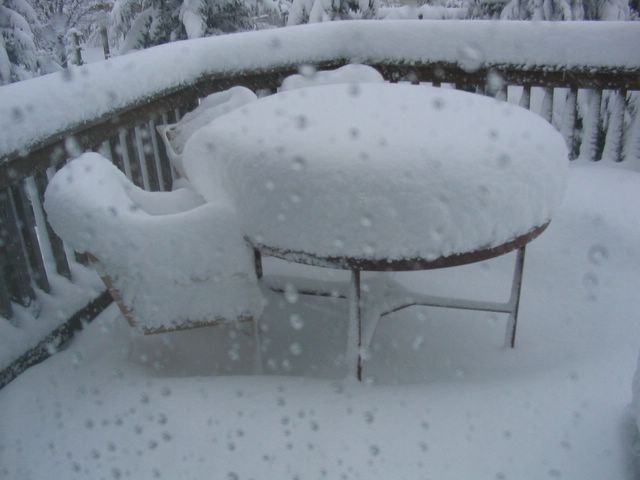
And not much else. By my estimation, we got about eight inches of snow late last night/early this morning. Although I haven't been able to go anywhere, at least I've had plenty of time to write.
It's been a few weeks since I've sent out any new stories, but I finally have one ready to go and another that's close. I've also made a decision to bite the bullet and finish the YA novel I've been (silently) working on. I hope to have it ready for entry in a contest about six weeks from now. I have a rough first draft done, but I'm still uncertain about the ending. (Something I might want to figure out fairly soon.) Six weeks isn't much time, but I'm going to go for it and see if I can push myself to meet the deadline.
So far I think the novel is miles better than the first novel I wrote (which, BTW, no one will ever read) back in 2002. I've improved a lot since then. I'm hoping it will show in the final product.
Now Playing = Ziggy Stardust – David Bowie
Reading = Orphan of Chaos – John C. Wright
Listening to = Life of Pi – Yann Martel
It's been a few weeks since I've sent out any new stories, but I finally have one ready to go and another that's close. I've also made a decision to bite the bullet and finish the YA novel I've been (silently) working on. I hope to have it ready for entry in a contest about six weeks from now. I have a rough first draft done, but I'm still uncertain about the ending. (Something I might want to figure out fairly soon.) Six weeks isn't much time, but I'm going to go for it and see if I can push myself to meet the deadline.
So far I think the novel is miles better than the first novel I wrote (which, BTW, no one will ever read) back in 2002. I've improved a lot since then. I'm hoping it will show in the final product.
Now Playing = Ziggy Stardust – David Bowie
Reading = Orphan of Chaos – John C. Wright
Listening to = Life of Pi – Yann Martel
Thursday, February 09, 2006
Trust
Yesterday I decided to hit the treadmill at Gold's Gym (after too many days off). There were plenty of openings, so I decided to workout in the Cardio Theatre (which sometimes feels more like Cardiac Theatre). Mystic River had just started on the big screen. I'd seen it before, but I stayed anyway. I'd thought the movie was okay when I saw it a couple of years ago. Watching the first 30 minutes of it again didn't change my opinion of it one way or another, but it did get me thinking about trusting and forgiving an author.
I've never read Dennis Lehane's Mystic River. The only Lehane book I've ever read was Shutter Island, which I threw across the room as soon as I finished it. Some books deserve to be thrown; this is one of them.
I threw it across the room because I felt Lehane's ending betrayed my trust. If you've read the book, you know what I'm talking about. If you haven't, Lehane violates one of the first rules speculative fiction writers...heck, ALL writers...learn early on and are expected to obey. Lehane gave me characters I cared about for 300 pages, then in the last chapter basically said "Enjoying it so far? Well, let me dump this on your parade and thank you very much for investing your time and money on this completely unsatisfying and untenable ending." I've never read another Lehane book.
A few months ago I talked with a big Lehane fan who asked me if I'd ever read his work. I unloaded on the poor guy. He threw up his hands in defense. "I know, I know," he said. "That was a lousy ending. But you've gotta read his first book, A Drink Before the War." Yeah, well don't hold your breath, I told him.
So a few weeks ago I find A Drink Before the War on one of my book excursions and buy it. I figure 33 cents at the Goodwill isn't going to break me. But I haven't opened it.
I also noticed that Lehane has a story in The Best American Short Stories 2005, which I own. I've read several of the stories in the collection. Not his.
I know I'm probably holding this grudge for too long. I remember at WFC a few months ago Jay Lake said that the writer owes something to the story, not the reader. I agree with him. But in my mind, Lehane not only treated his readers badly in Shutter Island, but treated his own story badly, and that's what really hurts.
Who knows – I may be accused of the same thing one day. I hope not, but it could happen. Maybe Lehane deserves a second chance. Maybe everyone does.
Now Playing = Baroque Duet – Kathleen Battle and Wynton Marsalis
Reading = Orphan of Chaos – John C. Wright
Listening to = Life of Pi – Yann Martel
I've never read Dennis Lehane's Mystic River. The only Lehane book I've ever read was Shutter Island, which I threw across the room as soon as I finished it. Some books deserve to be thrown; this is one of them.
I threw it across the room because I felt Lehane's ending betrayed my trust. If you've read the book, you know what I'm talking about. If you haven't, Lehane violates one of the first rules speculative fiction writers...heck, ALL writers...learn early on and are expected to obey. Lehane gave me characters I cared about for 300 pages, then in the last chapter basically said "Enjoying it so far? Well, let me dump this on your parade and thank you very much for investing your time and money on this completely unsatisfying and untenable ending." I've never read another Lehane book.
A few months ago I talked with a big Lehane fan who asked me if I'd ever read his work. I unloaded on the poor guy. He threw up his hands in defense. "I know, I know," he said. "That was a lousy ending. But you've gotta read his first book, A Drink Before the War." Yeah, well don't hold your breath, I told him.
So a few weeks ago I find A Drink Before the War on one of my book excursions and buy it. I figure 33 cents at the Goodwill isn't going to break me. But I haven't opened it.
I also noticed that Lehane has a story in The Best American Short Stories 2005, which I own. I've read several of the stories in the collection. Not his.
I know I'm probably holding this grudge for too long. I remember at WFC a few months ago Jay Lake said that the writer owes something to the story, not the reader. I agree with him. But in my mind, Lehane not only treated his readers badly in Shutter Island, but treated his own story badly, and that's what really hurts.
Who knows – I may be accused of the same thing one day. I hope not, but it could happen. Maybe Lehane deserves a second chance. Maybe everyone does.
Now Playing = Baroque Duet – Kathleen Battle and Wynton Marsalis
Reading = Orphan of Chaos – John C. Wright
Listening to = Life of Pi – Yann Martel
Wednesday, February 08, 2006
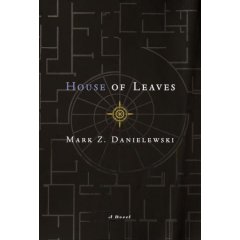
Mark Z. Danielewski's House of Leaves
After reading Jeff VanderMeer's essay on House of Leaves in Horror: Another 100 Best Books, I was on a mission to find Danielewski's debut novel. I found it, all 700 pages of it, and dived in.
When I finally came out, I was stunned. I can't really add much to VanderMeer's excellent essay on the book. All I can tell you is that House of Leaves is an unconventional tour-de-force that will reward patient readers immensely.
I'm grossly oversimplifying here, but House of Leaves is a story within a story within a story. Twenty-something Johnny Truant discovers a collection of writings by an old blind man named Zampano. The writings are largely a study of a documentary film called The Navidson Record, which in itself is a chronicle of the strange goings-on inside the house of Pulitzer Prize-winning photographer Will Navidson. Navidson, his partner Karen and their two children move into a house in Virginia, a house that holds the promise to bring Will and Karen's fractured relationship closer to healing. But the house holds much more.
Navidson discovers that the inside of the house is larger than the outside. Immensely larger. Colossally larger. Navidson even hires explorers to find out just what's going on in the house while he sets about documenting the entire expedition on film. Meanwhile his relationship with his family deteriorates.
But that's just part of the story. Exactly who was this Zampano and why did he compile all this information about The Navidson Record? Does the film even exist? Johnny has to find out. To say that all things Navidson become an obsession for Johnny is a huge understatement.
House of Leaves works as a study of what drives us to do the things we do, regardless of the consequences. It's also a heartbreaking look at relationships. It's often humorous. And it contains several moments of pure and absolute terror. Of the thirteen books I've read so far in 2006, House of Leaves tops the list. Highly recommended.
Now Playing = Baroque Duet – Kathleen Battle and Wynton Marsalis
Reading = Orphan of Chaos – John C. Wright
Listening to = Life of Pi – Yann Martel
When I finally came out, I was stunned. I can't really add much to VanderMeer's excellent essay on the book. All I can tell you is that House of Leaves is an unconventional tour-de-force that will reward patient readers immensely.
I'm grossly oversimplifying here, but House of Leaves is a story within a story within a story. Twenty-something Johnny Truant discovers a collection of writings by an old blind man named Zampano. The writings are largely a study of a documentary film called The Navidson Record, which in itself is a chronicle of the strange goings-on inside the house of Pulitzer Prize-winning photographer Will Navidson. Navidson, his partner Karen and their two children move into a house in Virginia, a house that holds the promise to bring Will and Karen's fractured relationship closer to healing. But the house holds much more.
Navidson discovers that the inside of the house is larger than the outside. Immensely larger. Colossally larger. Navidson even hires explorers to find out just what's going on in the house while he sets about documenting the entire expedition on film. Meanwhile his relationship with his family deteriorates.
But that's just part of the story. Exactly who was this Zampano and why did he compile all this information about The Navidson Record? Does the film even exist? Johnny has to find out. To say that all things Navidson become an obsession for Johnny is a huge understatement.
House of Leaves works as a study of what drives us to do the things we do, regardless of the consequences. It's also a heartbreaking look at relationships. It's often humorous. And it contains several moments of pure and absolute terror. Of the thirteen books I've read so far in 2006, House of Leaves tops the list. Highly recommended.
Now Playing = Baroque Duet – Kathleen Battle and Wynton Marsalis
Reading = Orphan of Chaos – John C. Wright
Listening to = Life of Pi – Yann Martel
Saturday, February 04, 2006
Oscar Fever
The announcement of this year's Oscar nominees only underscores the fact that I haven't seen very many movies lately. Of the five films nominated for Best Picture, the only one I've seen is Crash. I had a little time on my hands yesterday and almost went to see Munich, but decided I'd better get home and walk the hound around the block a few times. (Bullet prefers the home theatre experience anyway.)
I'm just delighted to see that Memoirs of a Geisha isn't anywhere close to the Best Picture category.
I'll make an early (and reasonably safe) guess that Brokeback Mountain will win Best Picture, Philip Seymour Hoffman will take home the Best Actor trophy, and Ang Lee will be named Best Director. I really know very little about the Best Actress category, but I'd bet a nickel that neither Judi Dench nor Charlize Theron will get within a sniff of a golden statue. It'll probably go to Reese Witherspoon in recognition of Walk the Line, especially since it didn't get a nomination for Best Picture. And, fair or not, regardless of Joaquin Phoenix's performance, this is obviously Hoffman's year. (Or is it?)
You can see the list of nominations here.
I get way too caught up in this stuff.
Now Playing = Brain Salad Surgery – Emerson, Lake & Palmer
Listening to = Orchard – Larry Watson
I'm just delighted to see that Memoirs of a Geisha isn't anywhere close to the Best Picture category.
I'll make an early (and reasonably safe) guess that Brokeback Mountain will win Best Picture, Philip Seymour Hoffman will take home the Best Actor trophy, and Ang Lee will be named Best Director. I really know very little about the Best Actress category, but I'd bet a nickel that neither Judi Dench nor Charlize Theron will get within a sniff of a golden statue. It'll probably go to Reese Witherspoon in recognition of Walk the Line, especially since it didn't get a nomination for Best Picture. And, fair or not, regardless of Joaquin Phoenix's performance, this is obviously Hoffman's year. (Or is it?)
You can see the list of nominations here.
I get way too caught up in this stuff.
Now Playing = Brain Salad Surgery – Emerson, Lake & Palmer
Listening to = Orchard – Larry Watson
Thursday, February 02, 2006

Only Two Issues Behind Now...
Once again, I'm behind (Does one ever get ahead?) on my reading, just finishing the January issue of F&SF. Favorite stories:
"Planet of Mystery" – Terry Bisson (concluded in the February issue)
"Less Than Nothing" – Robert Reed
"The Boy in Zaquitos" – Bruce McAllister
The story I'm writing right now is finally starting to gel. It looks like it's going to come in at a little more than 5,000 words, which is quite a long story for me.
Plus I've got another couple of stories to tinker with. Lady Churchill's thought "Results May Vary" was interesting, but the ending didn't work. They're right. But I think it can be fixed without turning the world upside down.
Now Playing = As Falls Wichita, So Falls Wichita Falls – Pat Metheny & Lyle Mays
Just Finished Listening to = Reading Lolita in Tehran - Azar Nafisi
"Planet of Mystery" – Terry Bisson (concluded in the February issue)
"Less Than Nothing" – Robert Reed
"The Boy in Zaquitos" – Bruce McAllister
The story I'm writing right now is finally starting to gel. It looks like it's going to come in at a little more than 5,000 words, which is quite a long story for me.
Plus I've got another couple of stories to tinker with. Lady Churchill's thought "Results May Vary" was interesting, but the ending didn't work. They're right. But I think it can be fixed without turning the world upside down.
Now Playing = As Falls Wichita, So Falls Wichita Falls – Pat Metheny & Lyle Mays
Just Finished Listening to = Reading Lolita in Tehran - Azar Nafisi
Wednesday, February 01, 2006
Two Recent Finds
The great thing about dealing in used books is the constant potential for delightful surprises. A couple of nice recent finds:
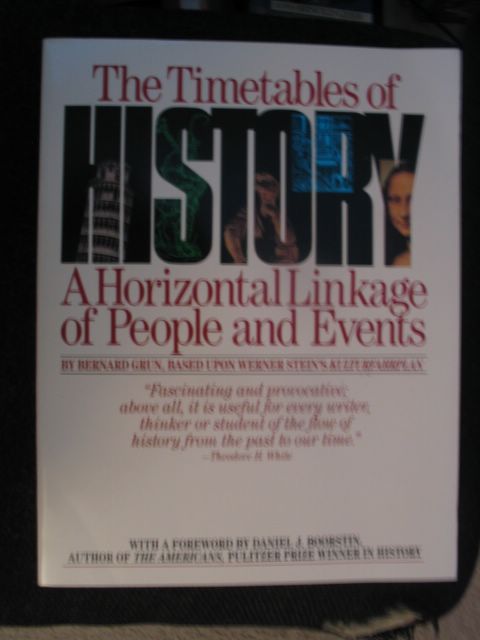
Bernard Grun's The Timetables of History: A Horizontal Linkage of People and Events. I'm sure there are other books out there that do the same thing – give you a horizontal view of historical events from 5000 A.D. to the (then) present year (1978 in this edition). Each two-page spread gives you that year's important events in the following categories:
History and Politics
Literature and Theater
Religion, Philosophy and Learning
Visual Arts
Music
Science, Technology and Growth
Daily Life
A great resource for writers. However, if you're like me can can't remember what happened last year, you might want an updated version. But hey, for $0.01 on Amazon, you can't go wrong. (I paid the outrageous price of $0.33 for my copy.)
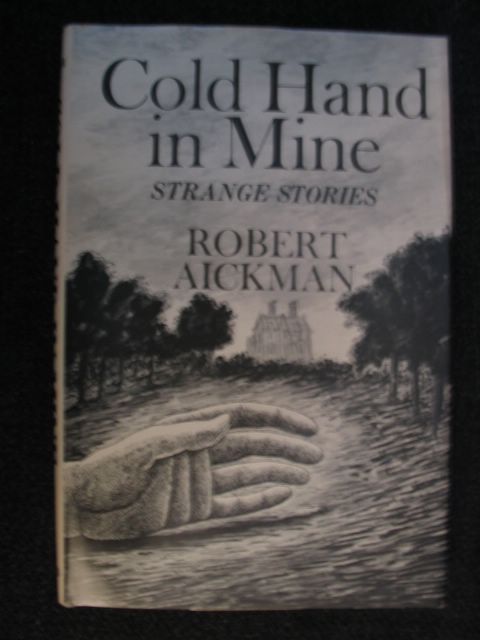
I also ran across a collection of stories by Robert Aickman, Cold Hand in Mine: Strange Stories. I read the first two stories last night and thoroughly enjoyed them. Rich, wonderfully crafted, creepy, slightly elusive, very thought-provoking. Aickman could easily become one of my favorite writers.
Now Playing = Chet Baker – The Pacific Jazz Years
Bernard Grun's The Timetables of History: A Horizontal Linkage of People and Events. I'm sure there are other books out there that do the same thing – give you a horizontal view of historical events from 5000 A.D. to the (then) present year (1978 in this edition). Each two-page spread gives you that year's important events in the following categories:
History and Politics
Literature and Theater
Religion, Philosophy and Learning
Visual Arts
Music
Science, Technology and Growth
Daily Life
A great resource for writers. However, if you're like me can can't remember what happened last year, you might want an updated version. But hey, for $0.01 on Amazon, you can't go wrong. (I paid the outrageous price of $0.33 for my copy.)
I also ran across a collection of stories by Robert Aickman, Cold Hand in Mine: Strange Stories. I read the first two stories last night and thoroughly enjoyed them. Rich, wonderfully crafted, creepy, slightly elusive, very thought-provoking. Aickman could easily become one of my favorite writers.
Now Playing = Chet Baker – The Pacific Jazz Years
Monday, January 30, 2006

Go Buy Your Copy Now
A big congratulations to good friend and Clarion bud Trent Hergenrader for his story "From the Mouths of Babes" in the March issue of F&SF. Also check out the John Joseph Adams interview with Trent here. Congrats, Trent! Keep up the good work.
Sunday, January 29, 2006

David Lynch and Writing
I watched David Lynch's Mulholland Drive last night for the second time. The first time I saw it (in 2002), it blew my mind, but I thought it was a very good film. This time, I appreciated it even more, even though I certainly don't claim to have it all figured out (and probably never will).
It seems people either love Lynch's work or they hate it. I've never spoken to anyone who's indifferent to Mulholland Drive. Either they're intrigued by it or find it just too confusing.
Lynch makes you work, there's no doubting it. He's not going to spell anything out for you, but he is going to provide you with what you need to make sense of the film. After watching it (and after recently reading Hal Duncan's Vellum), I began to wonder how much is too much to ask of a viewer or a reader? Is there such a thing as too much? And as a writer, how do you know when you've crossed that line?
I love to encounter films/books/musical works that challenge me. Lynch certainly challenges. So does Hal Duncan. I think as writers we need to push ourselves to find ways to challenge audiences and still keep the wheels on. It's not always easy. But who said it would be?
Now Playing = Duke Ellington and His Orchestra at Newport
Listening To = The Handmaid's Tale – Margaret Atwood
It seems people either love Lynch's work or they hate it. I've never spoken to anyone who's indifferent to Mulholland Drive. Either they're intrigued by it or find it just too confusing.
Lynch makes you work, there's no doubting it. He's not going to spell anything out for you, but he is going to provide you with what you need to make sense of the film. After watching it (and after recently reading Hal Duncan's Vellum), I began to wonder how much is too much to ask of a viewer or a reader? Is there such a thing as too much? And as a writer, how do you know when you've crossed that line?
I love to encounter films/books/musical works that challenge me. Lynch certainly challenges. So does Hal Duncan. I think as writers we need to push ourselves to find ways to challenge audiences and still keep the wheels on. It's not always easy. But who said it would be?
Now Playing = Duke Ellington and His Orchestra at Newport
Listening To = The Handmaid's Tale – Margaret Atwood
Saturday, January 28, 2006
Here's Your Chance to Support Great Writing
Ed Bryant
Tobias S. Buckell
Octavia E. Butler
Ted Chiang
Robert Crais
Cory Doctorow
Scott Edelman
George Alec Effinger
Gregory Frost
Theodora Goss
Eileen Gunn
Nalo Hopkinson
James Patrick Kelly
Kathe Koja
Geoffrey A. Landis
Kelly Link
Vonda McIntyre
Pat Murphy
Jenn Reese
Madeleine Robins
Kim Stanley Robinson
Richard Paul Russo
Al Sarrantonio
Lucius Shepard
Martha Soukup
Bruce Sterling
Mary Turzillo
Lisa Tuttle
Leslie What
If you've ever read and enjoyed writing by any of the people listed above (or even if you haven't), I'd like for you to consider doing something.
The Clarion Science Fiction and Fantasy Workshop has been shaping and developing writers of speculative fiction since 1968. The people above are just some of those who have benefited from the Clarion experience. I could write for pages about the great experience I had at Clarion (2004) and the wonderful people I met there. But I want to ask you to consider helping Clarion continue.
Clarion has recently suffered a tremendous removal of financial support, both from government and other institutions. The Clarion Foundation (all non-paid volunteers) is currently seeking financial support in order to keep the workshop alive. You can read the details and find out how you can help here.
I said that I could fill pages on what Clarion has meant (and continues to mean) to me. Contrary to what some would have you believe, Clarion is not some elitist club of writers being indoctrinated into "The Formula" of science fiction and fantasy writing. There is no "formula." Clarion is simply a highly intense, yet supportive place where for six weeks you can learn how to improve your writing.
Publishing is important to writers. Over one third of those who attend Clarion are eventually published. After just eighteen months, half of our Class of 2004 is now published. But to me, that's not the most important thing.
What's important is that Clarion teaches you and gives you the tools to become a better writer. Yes, it feels great to have published two stories on the Internet and one in print, but it feels better knowing that I've grown as a writer. I don't know – I might never publish anything else, but I know I'm developing as a writer. That's what it's all about. And Clarion was a big part of that.
Last weekend Clarion held a one-day workshop for young writers led by Charles Coleman Finlay and Holly Black. Forty young writers attended. That's exciting, seeing the future of fantastic fiction getting such a tremendous start.
If speculative fiction, fantastic fiction, science fiction, fantasy (use whatever labels you like) is important to you, I urge you to consider a donation to The Clarion Foundation. Thanks for reading.
Now Playing = I'm Wide Awake, It's Morning – Bright Eyes
Listening To = The Handmaid's Tale – Margaret Atwood
Tobias S. Buckell
Octavia E. Butler
Ted Chiang
Robert Crais
Cory Doctorow
Scott Edelman
George Alec Effinger
Gregory Frost
Theodora Goss
Eileen Gunn
Nalo Hopkinson
James Patrick Kelly
Kathe Koja
Geoffrey A. Landis
Kelly Link
Vonda McIntyre
Pat Murphy
Jenn Reese
Madeleine Robins
Kim Stanley Robinson
Richard Paul Russo
Al Sarrantonio
Lucius Shepard
Martha Soukup
Bruce Sterling
Mary Turzillo
Lisa Tuttle
Leslie What
If you've ever read and enjoyed writing by any of the people listed above (or even if you haven't), I'd like for you to consider doing something.
The Clarion Science Fiction and Fantasy Workshop has been shaping and developing writers of speculative fiction since 1968. The people above are just some of those who have benefited from the Clarion experience. I could write for pages about the great experience I had at Clarion (2004) and the wonderful people I met there. But I want to ask you to consider helping Clarion continue.
Clarion has recently suffered a tremendous removal of financial support, both from government and other institutions. The Clarion Foundation (all non-paid volunteers) is currently seeking financial support in order to keep the workshop alive. You can read the details and find out how you can help here.
I said that I could fill pages on what Clarion has meant (and continues to mean) to me. Contrary to what some would have you believe, Clarion is not some elitist club of writers being indoctrinated into "The Formula" of science fiction and fantasy writing. There is no "formula." Clarion is simply a highly intense, yet supportive place where for six weeks you can learn how to improve your writing.
Publishing is important to writers. Over one third of those who attend Clarion are eventually published. After just eighteen months, half of our Class of 2004 is now published. But to me, that's not the most important thing.
What's important is that Clarion teaches you and gives you the tools to become a better writer. Yes, it feels great to have published two stories on the Internet and one in print, but it feels better knowing that I've grown as a writer. I don't know – I might never publish anything else, but I know I'm developing as a writer. That's what it's all about. And Clarion was a big part of that.
Last weekend Clarion held a one-day workshop for young writers led by Charles Coleman Finlay and Holly Black. Forty young writers attended. That's exciting, seeing the future of fantastic fiction getting such a tremendous start.
If speculative fiction, fantastic fiction, science fiction, fantasy (use whatever labels you like) is important to you, I urge you to consider a donation to The Clarion Foundation. Thanks for reading.
Now Playing = I'm Wide Awake, It's Morning – Bright Eyes
Listening To = The Handmaid's Tale – Margaret Atwood
Thursday, January 26, 2006

Cell by Stephen King (Some Spoilers)
Many, many Stephen King fans have been waiting a long time for this novel. Sure, in the past few years he's released the final three books in The Dark Tower series and surprised just about everyone (positively or negatively) with last year's paperback original The Colorado Kid. And now (actually Tuesday) he's released Cell, his first real "horror" novel in nearly four years (since From a Buick 8).
Quick synopsis: Comic/graphic novel artist Clayton Riddell has just landed a big book deal in Boston and is eager to return home to Maine. Before he can get out of town, Clay witnesses complete mayhem as cell phone users are turned into crazed zombies, destroying everyone (including themselves) in their path. As he seeks to escape the city, Clay can't be sure if what he believes to be cell-phone terrorism is happening on a world-wide basis or is confined to the immediate area. All he knows is that his son Johnny has a cell phone.
I really wanted to like Cell and at several points along the way, I did. Cell begins well, but for me the novel deteriorates as it quickly becomes clear that:
1 - The story is going to turn into a quest-like saga far too similar to The Stand (or more accurately, The Stand meets Night of the Living Dead).
2 - Fear for his son's safety will motivate Clay to find him, no matter what.
3 - The strengths of the story at the beginning will only weaken as the plot unfolds.
Don't get me wrong, the novel is entertaining. It's not a bad novel. I just felt like I'd been there before. Sure, there are a few shocks (This is King we're talking about, ya know.), but no real surprises. I'd really hoped King would have more to say about our cell-phone crazed culture, but the technology just seemed to be a jumping off point to launch the story.
After finishing the book, I looked at a few reviews and saw that I'm swimming upstream by giving it a marginal recommendation. You can disagree if you like - I just think there's better King out there. His next book, Lisey's Story is due in October. I guess we'll see then.
Now Playing = Secret Story – Pat Metheny
Listening To = To Say Nothing of the Dog – Connie Willis
Quick synopsis: Comic/graphic novel artist Clayton Riddell has just landed a big book deal in Boston and is eager to return home to Maine. Before he can get out of town, Clay witnesses complete mayhem as cell phone users are turned into crazed zombies, destroying everyone (including themselves) in their path. As he seeks to escape the city, Clay can't be sure if what he believes to be cell-phone terrorism is happening on a world-wide basis or is confined to the immediate area. All he knows is that his son Johnny has a cell phone.
I really wanted to like Cell and at several points along the way, I did. Cell begins well, but for me the novel deteriorates as it quickly becomes clear that:
1 - The story is going to turn into a quest-like saga far too similar to The Stand (or more accurately, The Stand meets Night of the Living Dead).
2 - Fear for his son's safety will motivate Clay to find him, no matter what.
3 - The strengths of the story at the beginning will only weaken as the plot unfolds.
Don't get me wrong, the novel is entertaining. It's not a bad novel. I just felt like I'd been there before. Sure, there are a few shocks (This is King we're talking about, ya know.), but no real surprises. I'd really hoped King would have more to say about our cell-phone crazed culture, but the technology just seemed to be a jumping off point to launch the story.
After finishing the book, I looked at a few reviews and saw that I'm swimming upstream by giving it a marginal recommendation. You can disagree if you like - I just think there's better King out there. His next book, Lisey's Story is due in October. I guess we'll see then.
Now Playing = Secret Story – Pat Metheny
Listening To = To Say Nothing of the Dog – Connie Willis
Monday, January 23, 2006
The Colorado Kid by Stephen King (Some Spoilers)
After finishing Stephen King's noir paperback original The Colorado Kid, I really wasn't at all surprised to read all the negative reviews. For the first quarter of the book, I was pretty bored with it myself, but something changed. I don't think the book changed, but maybe my perception of it did. (More about that in a sec.)
I think these were the biggest problems readers had with the book:
1 – It's by Stephen King. Fair or not, we've come to expect King to deliver some type of horror, mayhem or other weird goings-on. And in this one, we don't really get that, at least not in the way we're used to from King. At its simplest, the book chronicles two veteran newspapermen relating the story of an unsolved mystery to a young female journalist.
2 – The Colorado Kid is labeled as a "hard-case crime novel." It is a crime novel (or is it?), but there's not much there to justify the noir/hard-boiled implications that tend to accompany such books.
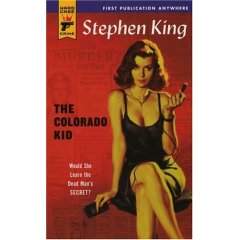
3 – The cover. It has absolutely nothing to do with the story. The book only includes two women, neither of which comes close to the babe on the cover.
After that first quarter of the book had passed, I realized I wasn't going to get what I expected, which was action, guns, tough-guy talk, femme fatales, darkened alleys, rain-soaked city streets after midnight – you know, noir stuff. Die-hard King fans looking for violence/blood/gore/etc. probably reached a level of disappointment much sooner than I did. In fact, I can imagine that several fans either gave up early on or grudgingly kept reading, turning the pages in a rage-filled fury. They felt their expectations had been betrayed. (Just read a few of the customer reviews on Amazon.)
I didn't give up, though, mainly because the two newspapermen are such good characters. Stereotypes, yes, but portrayed well as they try, in their own charming way, to show the rookie journalist the ropes. The Colorado Kid story in the novel is really immaterial. What's important is the power of storytelling and how the storytelling torch, if you will, is being passed from one generation to another. If I had to compare The Colorado Kid to a movie, it would be My Dinner with Andre. If you hated that movie, you'll probably hate The Colorado Kid. But if you think about it, the two are very similar. Both elevate the power of conversation, ideas, , speculation, the beauty of telling a story and the pleasure it gives us. With that in mind, I enjoyed The Colorado Kid very much. I admire King for writing it. It will probably never be mentioned in any discussions of his best work, but I'm sure he knew that going in. It's a quiet little story that deserves to be read. Only readers need to know what they're getting themselves into.
Right now I'm halfway through King's new novel The Cell, which is an entirely different can of worms. I'll blab about it next time.
Now Playing = Brain Salad Surgery – Emerson, Lake & Palmer
Just Finished = "Planet of Mystery" – Terry Bisson (F&SF Jan. and Feb.)
"The Smile on Happy Chang's Face" – Tom Perrotta (The Best American Short Stories 2005)
I think these were the biggest problems readers had with the book:
1 – It's by Stephen King. Fair or not, we've come to expect King to deliver some type of horror, mayhem or other weird goings-on. And in this one, we don't really get that, at least not in the way we're used to from King. At its simplest, the book chronicles two veteran newspapermen relating the story of an unsolved mystery to a young female journalist.
2 – The Colorado Kid is labeled as a "hard-case crime novel." It is a crime novel (or is it?), but there's not much there to justify the noir/hard-boiled implications that tend to accompany such books.
3 – The cover. It has absolutely nothing to do with the story. The book only includes two women, neither of which comes close to the babe on the cover.
After that first quarter of the book had passed, I realized I wasn't going to get what I expected, which was action, guns, tough-guy talk, femme fatales, darkened alleys, rain-soaked city streets after midnight – you know, noir stuff. Die-hard King fans looking for violence/blood/gore/etc. probably reached a level of disappointment much sooner than I did. In fact, I can imagine that several fans either gave up early on or grudgingly kept reading, turning the pages in a rage-filled fury. They felt their expectations had been betrayed. (Just read a few of the customer reviews on Amazon.)
I didn't give up, though, mainly because the two newspapermen are such good characters. Stereotypes, yes, but portrayed well as they try, in their own charming way, to show the rookie journalist the ropes. The Colorado Kid story in the novel is really immaterial. What's important is the power of storytelling and how the storytelling torch, if you will, is being passed from one generation to another. If I had to compare The Colorado Kid to a movie, it would be My Dinner with Andre. If you hated that movie, you'll probably hate The Colorado Kid. But if you think about it, the two are very similar. Both elevate the power of conversation, ideas, , speculation, the beauty of telling a story and the pleasure it gives us. With that in mind, I enjoyed The Colorado Kid very much. I admire King for writing it. It will probably never be mentioned in any discussions of his best work, but I'm sure he knew that going in. It's a quiet little story that deserves to be read. Only readers need to know what they're getting themselves into.
Right now I'm halfway through King's new novel The Cell, which is an entirely different can of worms. I'll blab about it next time.
Now Playing = Brain Salad Surgery – Emerson, Lake & Palmer
Just Finished = "Planet of Mystery" – Terry Bisson (F&SF Jan. and Feb.)
"The Smile on Happy Chang's Face" – Tom Perrotta (The Best American Short Stories 2005)
Friday, January 20, 2006
Where Are the Special Edition DVDs???
Compared to most avid film buffs, I don't own that many DVDs, maybe 50 or so. But there are at least seven that I would buy today if collector/special editions became available. It really burns me up that completely forgettable movies seem to have collector editions galore, but so many films that have stood the test of time are ignored. Here are a few films that, as far as I know, are not on the horizon for special editions.
The Maltese Falcon (1941)
Currently has just a few features, and those are more about Bogart than the film itself. No audio commentary. This is #1 on my wish list, Warner Bros. If you can do Casablanca, you can do this one. Both deserve great editions.
Bonnie and Clyde (1967)
This is the first film I ever saw that rocked my world. (I think I was in the third grade at the time.) Currently no commentary, no extras. That's the biggest crime associated with this picture.
The Man Who Would Be King (1975)
Currently includes one short featurette, no commentary. John Huston had to wait decades to film this story. Looks like we'll have to wait an equal amount of time for a decent edition.
Chinatown (1974)
Currently contains interviews with Roman Polanski, screenwriter Robert Towne and producer Robert Evans, but with the impact this film had, it should contain much more. I can't remember if this has a commentary or not.
2001: A Space Odyssey (1968)
A "deluxe" edition is available, but the "extras" include the soundtrack on CD, a 70MM limited edition film frame (big whoop) and a booklet. I own a regular Bb version (the only movie on this list that I own) that includes a lecture by Arthur C. Clarke.
Two Women (1961)
The only version currently available on DVD is of such inferior quality somebody should be arrested. What a lousy transfer for such a great film (with a wonderful performance by Sofia Loren). Anything would be an improvement over the current print.
The Searchers (1956)
Another film of far-reaching influence deserving of special treatment. Currently contains four documentary shorts (which I have not seen).
DVD Talk is a pretty good site that keeps an eye on future releases. I'm anxiously awaiting news on any of the above. I'm sure you've got a few titles you'd like to see treated with a little TLC as well. Cross your fingers.
Now Playing = Kiss My Axe – Al Di Meola
Now Reading = House of Leaves – Mark Z. Danielewski
Cell – Stephen King
The Maltese Falcon (1941)
Currently has just a few features, and those are more about Bogart than the film itself. No audio commentary. This is #1 on my wish list, Warner Bros. If you can do Casablanca, you can do this one. Both deserve great editions.
Bonnie and Clyde (1967)
This is the first film I ever saw that rocked my world. (I think I was in the third grade at the time.) Currently no commentary, no extras. That's the biggest crime associated with this picture.
The Man Who Would Be King (1975)
Currently includes one short featurette, no commentary. John Huston had to wait decades to film this story. Looks like we'll have to wait an equal amount of time for a decent edition.
Chinatown (1974)
Currently contains interviews with Roman Polanski, screenwriter Robert Towne and producer Robert Evans, but with the impact this film had, it should contain much more. I can't remember if this has a commentary or not.
2001: A Space Odyssey (1968)
A "deluxe" edition is available, but the "extras" include the soundtrack on CD, a 70MM limited edition film frame (big whoop) and a booklet. I own a regular Bb version (the only movie on this list that I own) that includes a lecture by Arthur C. Clarke.
Two Women (1961)
The only version currently available on DVD is of such inferior quality somebody should be arrested. What a lousy transfer for such a great film (with a wonderful performance by Sofia Loren). Anything would be an improvement over the current print.
The Searchers (1956)
Another film of far-reaching influence deserving of special treatment. Currently contains four documentary shorts (which I have not seen).
DVD Talk is a pretty good site that keeps an eye on future releases. I'm anxiously awaiting news on any of the above. I'm sure you've got a few titles you'd like to see treated with a little TLC as well. Cross your fingers.
Now Playing = Kiss My Axe – Al Di Meola
Now Reading = House of Leaves – Mark Z. Danielewski
Cell – Stephen King
Thursday, January 19, 2006
Had a nice quiet birthday at Dave and Cheryl's last night. Got a sweater, a nice gig case for my trumpet (with lots of room for my stand and mutes), a Jamey Abersold book/CD and Geoff Ryman's Air, which I can't wait to read. And cake. Lots of cake.
Just finished listening to Diary by Chuck Palahniuk. It's the first Palahniuk I've read/listened to and I liked a lot of it. I really wanted to like more of it, but the ending felt very rushed. I'll definitely read some of his other works. Maybe Diary was not the best choice for my first taste of Palahniuk's writing.
So far, Stephen King's The Colorado Kid is also not a great choice. About one-fourth of the way thorough this short book (which so far moves at a snail's pace), I'm pretty much bored. (And I consider myself a pretty patient reader.)
On the writing side, I've got a short story that's about two-thirds finished, but just can't seem to get that last third ironed out. So what did I do? Start a new story, of course. The funny thing is when I got back to the first story, I had a pretty good idea where it needed to go.
Now Playing = Night Train – Oscar Peterson
Now Reading = House of Leaves – Mark Z. Danielewski (in print)
The Colorado Kid – Stephen King (on CD in the car)
Just finished listening to Diary by Chuck Palahniuk. It's the first Palahniuk I've read/listened to and I liked a lot of it. I really wanted to like more of it, but the ending felt very rushed. I'll definitely read some of his other works. Maybe Diary was not the best choice for my first taste of Palahniuk's writing.
So far, Stephen King's The Colorado Kid is also not a great choice. About one-fourth of the way thorough this short book (which so far moves at a snail's pace), I'm pretty much bored. (And I consider myself a pretty patient reader.)
On the writing side, I've got a short story that's about two-thirds finished, but just can't seem to get that last third ironed out. So what did I do? Start a new story, of course. The funny thing is when I got back to the first story, I had a pretty good idea where it needed to go.
Now Playing = Night Train – Oscar Peterson
Now Reading = House of Leaves – Mark Z. Danielewski (in print)
The Colorado Kid – Stephen King (on CD in the car)
Wednesday, January 18, 2006
Another Birthday
For some reason I tend to reflect on the previous year on my birthday rather than the New Year. (I guess I need those extra 2.5 weeks to stew things over.) I turn 44 today, but here are a few areas of my life and the ages I actually feel in them:
Writing
I'm writing more aggressively as I get older. I'm certainly writing more and with more energy, sending stuff out more than I did a year ago. I'm also reading more, reading more widely and reading with a more critical eye. I can see growth in all areas, but I still have a lot to learn.
Actual writing age: early 20's.
I've also grown in knowledge of the genre(s). I really feel embarrassed about how little I knew of the genre going into Clarion. When I went to Clarion, I was 42. My knowledge of genre was probably around age 7. Leading up to Clarion, I'd never even heard of Kelly Link, Jeffrey Ford, Lucius Shepard, Andy Duncan, or Jeff VanderMeer. Now they're some of my favorite writers. I didn't know what had been done before, what types of stories were worn-out or cliched. I know a bit more now. I'm up to an actual reading age of 19, maybe. (Hey, it's good to feel 19 in ANY capacity.)
Work
I've realized that I don't have to make a lot of money (because I certainly don't) at my job. I enjoy finding and selling books and never get tired of it. Every day is different with different challenges. Plus it's fun. I know millions of people who dread thinking about their jobs. I don't and I treasure that. I probably won't always be a bookseller, but I like it, it pays some bills, and it gives me time to write. What's not to like?
Actual work age: 26
Physical Activity
Exercising more, enjoying it more...most of the time. But if I have to watch another movie like The Notebook at Gold's Gym's Cardio Theatre, I'll scream.
Actual exercise age: mid-30's
Other
Somebody zooms past me driving 80 or faster - Actual driving age: 65
I have to pass somebody driving 50 or slower - Actual driving age: 15
First beer - Actual drinking age: 18 (in some states)
Third beer or more - Actual drinking age: at least 60 (increasing in increments of 5 years with each successive beer)
Waking up at 5:30AM – Actual waking age (as far as being alert, active): 18
Staying up past 11:00PM – Actual barely-awake age: 72
Now Playing/Reading = same as yesterday
Writing
I'm writing more aggressively as I get older. I'm certainly writing more and with more energy, sending stuff out more than I did a year ago. I'm also reading more, reading more widely and reading with a more critical eye. I can see growth in all areas, but I still have a lot to learn.
Actual writing age: early 20's.
I've also grown in knowledge of the genre(s). I really feel embarrassed about how little I knew of the genre going into Clarion. When I went to Clarion, I was 42. My knowledge of genre was probably around age 7. Leading up to Clarion, I'd never even heard of Kelly Link, Jeffrey Ford, Lucius Shepard, Andy Duncan, or Jeff VanderMeer. Now they're some of my favorite writers. I didn't know what had been done before, what types of stories were worn-out or cliched. I know a bit more now. I'm up to an actual reading age of 19, maybe. (Hey, it's good to feel 19 in ANY capacity.)
Work
I've realized that I don't have to make a lot of money (because I certainly don't) at my job. I enjoy finding and selling books and never get tired of it. Every day is different with different challenges. Plus it's fun. I know millions of people who dread thinking about their jobs. I don't and I treasure that. I probably won't always be a bookseller, but I like it, it pays some bills, and it gives me time to write. What's not to like?
Actual work age: 26
Physical Activity
Exercising more, enjoying it more...most of the time. But if I have to watch another movie like The Notebook at Gold's Gym's Cardio Theatre, I'll scream.
Actual exercise age: mid-30's
Other
Somebody zooms past me driving 80 or faster - Actual driving age: 65
I have to pass somebody driving 50 or slower - Actual driving age: 15
First beer - Actual drinking age: 18 (in some states)
Third beer or more - Actual drinking age: at least 60 (increasing in increments of 5 years with each successive beer)
Waking up at 5:30AM – Actual waking age (as far as being alert, active): 18
Staying up past 11:00PM – Actual barely-awake age: 72
Now Playing/Reading = same as yesterday
Tuesday, January 17, 2006
Breaking the Rules for Fun and Profit
Kate Wilhelm writes in Storyteller: Writing Lessons and More from 27 Years of the Clarion Writers' Workshop:
"The first named character is the one the story is about."
I noticed that Robert Reed breaks that rule in his story "Less Than Nothing," the lead story in the January issue of F&SF. I also realized that I'm breaking the same rule in the story I'm working on right now. (The difference? Reed knows what he's doing; I'm doing it by accident. I think.)
I understand why Wilhelm says what she says. Reed's first paragraph consists of nine sentences. The character the story is about isn't named until the ninth sentence. I did have to go back and re-read that opening paragraph to make sure I had everything straight. Considering what follows, Reed made the right choice in breaking the rule and beginning the story the way he did. Sure, I had to go back and read that paragraph again, but so what? It was worth the extra effort. Would it confuse most readers of genre? Maybe. Maybe not. The point is, in this case, what seems to make the story weak actually makes it stronger. (For what it's worth, my main character is named in the fourth of five sentences of the first paragraph.)
Now can a neophyte writer like me get away with breaking that (or any other established) rule? Don't know. Probably not at this point in my writing. I'll go back and look at my story and see if what I've written is confusing.
Of course Wilhelm also writes that professional writers know how to break the rules. Reed obviously does.
Now Playing = The Sidewinder – Lee Morgan
Now Reading = House of Leaves – Mark Z. Danielewski (Yeah, still. It's 700 pages, okay?)
"The first named character is the one the story is about."
I noticed that Robert Reed breaks that rule in his story "Less Than Nothing," the lead story in the January issue of F&SF. I also realized that I'm breaking the same rule in the story I'm working on right now. (The difference? Reed knows what he's doing; I'm doing it by accident. I think.)
I understand why Wilhelm says what she says. Reed's first paragraph consists of nine sentences. The character the story is about isn't named until the ninth sentence. I did have to go back and re-read that opening paragraph to make sure I had everything straight. Considering what follows, Reed made the right choice in breaking the rule and beginning the story the way he did. Sure, I had to go back and read that paragraph again, but so what? It was worth the extra effort. Would it confuse most readers of genre? Maybe. Maybe not. The point is, in this case, what seems to make the story weak actually makes it stronger. (For what it's worth, my main character is named in the fourth of five sentences of the first paragraph.)
Now can a neophyte writer like me get away with breaking that (or any other established) rule? Don't know. Probably not at this point in my writing. I'll go back and look at my story and see if what I've written is confusing.
Of course Wilhelm also writes that professional writers know how to break the rules. Reed obviously does.
Now Playing = The Sidewinder – Lee Morgan
Now Reading = House of Leaves – Mark Z. Danielewski (Yeah, still. It's 700 pages, okay?)
Sunday, January 15, 2006
Take Note
When I was a band director, I used to carry around a little notebook (Actually it was one of those little fat notebooks that you can't find anymore.) and write down anything I learned or observed that I thought would make me a better teacher. I probably looked like a big geek, but I kept at it. In three years I filled up six notebooks and felt like I learned enough for two degrees.
Sometimes I heard another teacher say something that just clicked, something I could immediately use/borrow/steal. Other times I observed a technique, jotted it down and poured over it later, trying to figure out why it worked.
I've just started taking notes on the short stories I'm reading, writing down things I learn from other writers' work. It helps me to be able to point to something in a story and say, "Here's what this sentence is doing," or "This description of the story's setting is really telling me about the protagonist." Most of the time, though, I'm just asking questions. "Why is this sentence here? Why this word choice? Why this setting?" I'm finding all of it helps.
Since Clarion, I've read a few books on writing, but I honestly believe most of them are worthless. I think it's more important to read (in and out of your genre) like a demon. And write like one too. But it's also necessary to examine stories that work (and those that don't) and understand why they work (or don't). So far, it's paying off. Writer geeks with notebooks unite!
Now Playing = "My Favorite Things" – John Coltrane
Now Reading = About to read the first story in Use Once, Then Destroy – Conrad Williams
Sometimes I heard another teacher say something that just clicked, something I could immediately use/borrow/steal. Other times I observed a technique, jotted it down and poured over it later, trying to figure out why it worked.
I've just started taking notes on the short stories I'm reading, writing down things I learn from other writers' work. It helps me to be able to point to something in a story and say, "Here's what this sentence is doing," or "This description of the story's setting is really telling me about the protagonist." Most of the time, though, I'm just asking questions. "Why is this sentence here? Why this word choice? Why this setting?" I'm finding all of it helps.
Since Clarion, I've read a few books on writing, but I honestly believe most of them are worthless. I think it's more important to read (in and out of your genre) like a demon. And write like one too. But it's also necessary to examine stories that work (and those that don't) and understand why they work (or don't). So far, it's paying off. Writer geeks with notebooks unite!
Now Playing = "My Favorite Things" – John Coltrane
Now Reading = About to read the first story in Use Once, Then Destroy – Conrad Williams
Saturday, January 14, 2006
The Things You Find in Books
As a used book dealer, I find all kinds of interesting and not-so interesting items between the pages. Here are a few I recently discovered:
An original copy of The Mason Williams Reader with a completely flat (It almost looked like it had been ironed.) Twizzlers wrapper inside.
Inside a book called Adapting to Abundance by Andrew R. Heinze - A card with a blonde girl in overalls on the front saying "A day without you is like a belly full of broccoli." Inside - "Happy Valentine's Day - Kate."
Inside The Structure of Biological Science by Rosenberg - A movie ticket stub to Muppet Treasure Island.
And people say my fiction's weird.
An original copy of The Mason Williams Reader with a completely flat (It almost looked like it had been ironed.) Twizzlers wrapper inside.
Inside a book called Adapting to Abundance by Andrew R. Heinze - A card with a blonde girl in overalls on the front saying "A day without you is like a belly full of broccoli." Inside - "Happy Valentine's Day - Kate."
Inside The Structure of Biological Science by Rosenberg - A movie ticket stub to Muppet Treasure Island.
And people say my fiction's weird.
Friday, January 13, 2006
Aunt Cindy and Uncle Andy
I'm very pleased to announce that Cindy's sister Cheryl gave birth Wednesday to Sarah Elizabeth Ani, 7 pounds, 13 ounces, 21 inches long. Sarah, Cheryl and Dave are all doing fine. (I'm already making a list of speculative tales to read to Sarah when we babysit.)
Thursday, January 12, 2006
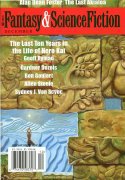
F&SF December Issue
I'm a little behind on my F&SF issues. The February issue came in the mail just a few days ago and I'm just finishing up December. So if you're as far behind as I am, I can recommend most of December's stories, strongly recommending "The Cure" by Robert Reed and what I consider one of the issue's best stories of 2005, "The Last Ten Years in the Life of Hero Kai" by Geoff Ryman. Here's how I'd rank the stories in the December issue:
1. "The Last Ten Years in the Life of Hero Kai" - Geoff Ryman
2. "The Cure" - Robert Reed
3. "The Last Akialoa" - Alan Dean Foster
4. "When the Great Days Came" - Gardner Dozois
5. "Walpurgis Afternoon" - Delia Sherman
6. "An Incident at the Luncheon of the Boating Party" - Allen M. Steele
7. "Poppies by Moonlight" - Sydney J. Van Scyoc
8. "Cannibal Farm" - Ron Goulart
Now Playing = Maiden Voyage - Herbie Hancock
Just Checked Out from the Library = Dogs in the Moonlight - Jay Lake
1. "The Last Ten Years in the Life of Hero Kai" - Geoff Ryman
2. "The Cure" - Robert Reed
3. "The Last Akialoa" - Alan Dean Foster
4. "When the Great Days Came" - Gardner Dozois
5. "Walpurgis Afternoon" - Delia Sherman
6. "An Incident at the Luncheon of the Boating Party" - Allen M. Steele
7. "Poppies by Moonlight" - Sydney J. Van Scyoc
8. "Cannibal Farm" - Ron Goulart
Now Playing = Maiden Voyage - Herbie Hancock
Just Checked Out from the Library = Dogs in the Moonlight - Jay Lake
Wednesday, January 11, 2006
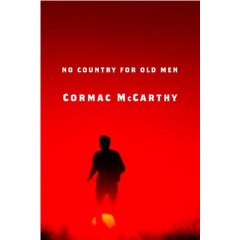
Cormac McCarthy's No Country for Old Men
I'd never read anything by Cormac McCarthy until just a few days ago when I picked up his latest novel No Country for Old Men (2005). I'd had his most famous (and most lauded) work Blood Meridian in my "January To-Read" stack (Yes, I actually do have such a stack set aside.) for a couple of weeks, but decided to read No Country first.
From the little I know about Blood Meridian, it's a brutally violent, yet brilliant work dealing with life, death, injustice, judgment, American culture, God, and much more. (I also know that I wish I had a First Edition instead of my ex-library Modern Library copy. If you've got a true first, you're looking at $300 or more if you want to sell it.)
No Country addresses some of the same issues as Blood Meridian, but according to what I've read about this new book, it's much more accessible than McCarthy's other works. I found the writing to be very bare-bones with few wasted words, which I greatly appreciate (and wish I could incorporate in my own writing), but rich with meaning and depth. What amazes me is how much McCarthy shows you about these characters while telling you so little. The setting/landscape (1980's West Texas and Mexico) is vital to the story, almost a character in itself. (You can read about the plot on Amazon, but it's better if you just jump into the book. If you don't like it after the first 20 pages, you're not going to like the rest of it.)
Although the novel is not perfect (There's too much symbolism at times, some of which doesn't work.), it is gripping. The way each of these characters faces death and change (Are they related?) is spellbinding. It's a fascinating book, my favorite read (out of three) of 2006 so far.
Now Playing = Why Should the Fire Die? – Nickel Creek
Now Reading = House of Leaves – Mark Z. Danielewski
From the little I know about Blood Meridian, it's a brutally violent, yet brilliant work dealing with life, death, injustice, judgment, American culture, God, and much more. (I also know that I wish I had a First Edition instead of my ex-library Modern Library copy. If you've got a true first, you're looking at $300 or more if you want to sell it.)
No Country addresses some of the same issues as Blood Meridian, but according to what I've read about this new book, it's much more accessible than McCarthy's other works. I found the writing to be very bare-bones with few wasted words, which I greatly appreciate (and wish I could incorporate in my own writing), but rich with meaning and depth. What amazes me is how much McCarthy shows you about these characters while telling you so little. The setting/landscape (1980's West Texas and Mexico) is vital to the story, almost a character in itself. (You can read about the plot on Amazon, but it's better if you just jump into the book. If you don't like it after the first 20 pages, you're not going to like the rest of it.)
Although the novel is not perfect (There's too much symbolism at times, some of which doesn't work.), it is gripping. The way each of these characters faces death and change (Are they related?) is spellbinding. It's a fascinating book, my favorite read (out of three) of 2006 so far.
Now Playing = Why Should the Fire Die? – Nickel Creek
Now Reading = House of Leaves – Mark Z. Danielewski
Monday, January 09, 2006
Your Story in Print
First, congrats to Clarion partners-in-crime Amelia and Trent for recent story sales and a big congrats to Charles and his wife for the newest addition to their family.
I received my copy of Southern Comfort on Friday. Of course, I immediately turned to my story just to make sure I/it really was in there. I/it was.
I guess all writers go through the feelings I had seeing my story in print: excitement at first, thinking, "Hey, that's really my story! In print! The words I wrote!" That means that somebody besides myself, Cindy, and the editors is (potentially) going to read this story!
Then: Oh God. People are going to read this story.
So you read it, looking for glaring mistakes, even though you know the editors have already been through it. And you let out a long breath of relief.
Now don't get me wrong, I really like my story. And I think it's a good story. But I see things that I would do differently now. Better word choices, better pacing, better description, lots of stuff. I think that's a good thing - I can see growth, can see how I'm a better writer now. Again, I think probably most writers go through this. It's part of the process.
One of my instructors emailed her congrats and said, "Savor this, your first sale." I think I'll always savor the first one. But I'll keep looking toward the next one.
Now Playing = Chaos and Creation in the Backyard - Paul McCartney
Now Reading = House of Leaves - Mark Z. Danielewski
I received my copy of Southern Comfort on Friday. Of course, I immediately turned to my story just to make sure I/it really was in there. I/it was.
I guess all writers go through the feelings I had seeing my story in print: excitement at first, thinking, "Hey, that's really my story! In print! The words I wrote!" That means that somebody besides myself, Cindy, and the editors is (potentially) going to read this story!
Then: Oh God. People are going to read this story.
So you read it, looking for glaring mistakes, even though you know the editors have already been through it. And you let out a long breath of relief.
Now don't get me wrong, I really like my story. And I think it's a good story. But I see things that I would do differently now. Better word choices, better pacing, better description, lots of stuff. I think that's a good thing - I can see growth, can see how I'm a better writer now. Again, I think probably most writers go through this. It's part of the process.
One of my instructors emailed her congrats and said, "Savor this, your first sale." I think I'll always savor the first one. But I'll keep looking toward the next one.
Now Playing = Chaos and Creation in the Backyard - Paul McCartney
Now Reading = House of Leaves - Mark Z. Danielewski
Thursday, January 05, 2006
Word Count and Texas Football
Yesterday was pretty busy. I only got a little over 300 words in, but made up for it this morning by putting down 1700. It was great to have 1700 words spill out (somewhat easily), but I don't want to have to play catch-up too many times.
I didn't watch the game, but was glad to see Texas beat USC (University of Spoiled Children) on the news this morning. I'm glad because I think the Longhorns finally deserve the recognition they've unjustly received for years. We lived in Austin for a year and I got so sick of all the UT fans, local sports radio guys, and the alumni. (Excuse me, not the alumni, but the "Texas-Ex" people, as they call themselves. Listen, if you graduated, you're an alumnus. If you dropped out, you're an ex-student. Get your terminology and your window stickers right.) Anyway, I'm all for giving a team their due when they deserve it and finally Texas does. Congrats, Horns. At least ONE Texas team experienced success this season. Right, Tuna?
I didn't watch the game, but was glad to see Texas beat USC (University of Spoiled Children) on the news this morning. I'm glad because I think the Longhorns finally deserve the recognition they've unjustly received for years. We lived in Austin for a year and I got so sick of all the UT fans, local sports radio guys, and the alumni. (Excuse me, not the alumni, but the "Texas-Ex" people, as they call themselves. Listen, if you graduated, you're an alumnus. If you dropped out, you're an ex-student. Get your terminology and your window stickers right.) Anyway, I'm all for giving a team their due when they deserve it and finally Texas does. Congrats, Horns. At least ONE Texas team experienced success this season. Right, Tuna?
Wednesday, January 04, 2006

2006 So Far
2006 is off to a good start in many ways. Here's a few of them:
1. New writing schedule. I've found that mornings are the best times for me to write. I normally get up between 5:30 and 6:00 and write for an hour – sometimes more, rarely less. Of course, I'll also try to squeeze in some time later in the day. The key is not letting anything (even sleep) interfere with that sacred morning time. No email or Internet until I've done my writing.
2. For the past ten days, I've averaged a little over 900 words a day.
3. I joined a gym. Yeah, I got tired of not being able to find a pair of pants that fit, so I joined Gold's Gym. It's great – I can drop off my book orders at the post office and swing by the gym. (It's only about two miles from the house.) Gold's has a darkened room with about 30 treadmills and ellipticals where they show movies on DVD. Cardio Theatre, it's called. It sure makes the time go faster, unless the movie is a real dud. Of course, you're only in there for 20-30 minutes, but you get a good idea whether or not you'd like to rent the whole movie. So far I've seen parts of The Bad News Bears, Coach, Total Recall, and Another 48 Hours. None of them I'd rent, but it's a good way to workout. I think you can even bring in your own DVDs and have them played. I doubt anyone would like to workout to Citizen Kane or The Third Man, but you never know.
Now Playing = Maiden Voyage – Herbie Hancock
Just Read = "More Tomorrow" (from More Tomorrow and Other Stories) – Michael Marshall Smith
Just Watched = Chinatown (1974)
1. New writing schedule. I've found that mornings are the best times for me to write. I normally get up between 5:30 and 6:00 and write for an hour – sometimes more, rarely less. Of course, I'll also try to squeeze in some time later in the day. The key is not letting anything (even sleep) interfere with that sacred morning time. No email or Internet until I've done my writing.
2. For the past ten days, I've averaged a little over 900 words a day.
3. I joined a gym. Yeah, I got tired of not being able to find a pair of pants that fit, so I joined Gold's Gym. It's great – I can drop off my book orders at the post office and swing by the gym. (It's only about two miles from the house.) Gold's has a darkened room with about 30 treadmills and ellipticals where they show movies on DVD. Cardio Theatre, it's called. It sure makes the time go faster, unless the movie is a real dud. Of course, you're only in there for 20-30 minutes, but you get a good idea whether or not you'd like to rent the whole movie. So far I've seen parts of The Bad News Bears, Coach, Total Recall, and Another 48 Hours. None of them I'd rent, but it's a good way to workout. I think you can even bring in your own DVDs and have them played. I doubt anyone would like to workout to Citizen Kane or The Third Man, but you never know.
Now Playing = Maiden Voyage – Herbie Hancock
Just Read = "More Tomorrow" (from More Tomorrow and Other Stories) – Michael Marshall Smith
Just Watched = Chinatown (1974)
Sunday, January 01, 2006
Writing to Music
I've talked to some writers who can't write anything with music playing and others who insist on it. I like to have something playing, but not everything works. Vocals, for instance. Maybe it's a case of conflicting words, but usually (with exceptions noted below) I can't focus with somebody else's words floating in the air. For the most part, instrumental jazz works best. Some art music (classical, if you want to call it that) really works well too. So here's my preferred list of music to write to:
Going for the One – Yes
It has lyrics, but they're out there and the music is so other-worldly, it works.
Monster – R.E.M.
I don't even like this band, but for some reason this disc gets the creative juices flowing. Go figure.
Maiden Voyage – Herbie Hancock
Blue Train – John Coltrane
Bitches Brew – Miles Davis
Just about anything by Pat Metheny (The Way Up and Imaginary Day are both good)
Symphony No. 2 – Howard Hanson/Saint Louis/Slatkin
Most of the Beethoven symphonies (I have this set.)
Mozart "Haydn" String quartets (I have this set.)
Deja Vu – North Texas Wind Symphony/Eugene Corporon
There's some real high energy music here. (Plus I never get tired of hearing Cindy's solo on "Blue Shades.")
Today's word count: 300 so far. Break's over; back to it.
Going for the One – Yes
It has lyrics, but they're out there and the music is so other-worldly, it works.
Monster – R.E.M.
I don't even like this band, but for some reason this disc gets the creative juices flowing. Go figure.
Maiden Voyage – Herbie Hancock
Blue Train – John Coltrane
Bitches Brew – Miles Davis
Just about anything by Pat Metheny (The Way Up and Imaginary Day are both good)
Symphony No. 2 – Howard Hanson/Saint Louis/Slatkin
Most of the Beethoven symphonies (I have this set.)
Mozart "Haydn" String quartets (I have this set.)
Deja Vu – North Texas Wind Symphony/Eugene Corporon
There's some real high energy music here. (Plus I never get tired of hearing Cindy's solo on "Blue Shades.")
Today's word count: 300 so far. Break's over; back to it.
Saturday, December 31, 2005
Getting Closer
Got a rejection from the Writers of the Future contest yesterday, but the good news is that I made it to the quarter-finals, as did Clarion 2005 alum Tom.
Just What I Needed...
I didn't get it for Christmas, but I found a copy of Horror: Another 100 Best Books edited by Stephen Jones and Kim Newman at my local library.
Oh, it's dangerous.
The book is arranged chronologically from The Revenger's Tragedy by Cyril Tourner in 1607 to More Tomorrow and Other Stories by Michael Marshall Smith in 2003. Since I know so little of the horror genre, I figured it might be better to read about what's most current (and hopefully available) and work backward. So far, of the first five entries (or last, in this case), I must, I mean absolutely must read four of them:
More Tomorrow and Other Stories – Michael Marshall Smith (2003)
Since the cheapest price for this book on Amazon is $300, I was delighted to find it in a nearby library.
House of Leaves – Mark Z. Danielewski (2000)
After reading Jeff VanderMeer's essay, I must read this, and soon.
A Haunting Beauty – Sir Charles Birkin (2000)
May be tough to find at a good price, but I'll find a way.
Reprisal – Mitchell Smith (1999)
This one appears the easiest to find/purchase. Amazon has it used from 1 cent.
And I've got 94 more to read about. Plus this is the sequel to the original 1988 book, so make that 194 to go.
Stephen Jones and Kim Newman - why do you do this to me?
Now Playing = Paris, Texas Soundtrack – Ry Cooder
Just Finished Reading = "The Man Who Drew Cats" from More Tomorrow & Other Stories – Michael Marshall Smith
Oh, it's dangerous.
The book is arranged chronologically from The Revenger's Tragedy by Cyril Tourner in 1607 to More Tomorrow and Other Stories by Michael Marshall Smith in 2003. Since I know so little of the horror genre, I figured it might be better to read about what's most current (and hopefully available) and work backward. So far, of the first five entries (or last, in this case), I must, I mean absolutely must read four of them:
More Tomorrow and Other Stories – Michael Marshall Smith (2003)
Since the cheapest price for this book on Amazon is $300, I was delighted to find it in a nearby library.
House of Leaves – Mark Z. Danielewski (2000)
After reading Jeff VanderMeer's essay, I must read this, and soon.
A Haunting Beauty – Sir Charles Birkin (2000)
May be tough to find at a good price, but I'll find a way.
Reprisal – Mitchell Smith (1999)
This one appears the easiest to find/purchase. Amazon has it used from 1 cent.
And I've got 94 more to read about. Plus this is the sequel to the original 1988 book, so make that 194 to go.
Stephen Jones and Kim Newman - why do you do this to me?
Now Playing = Paris, Texas Soundtrack – Ry Cooder
Just Finished Reading = "The Man Who Drew Cats" from More Tomorrow & Other Stories – Michael Marshall Smith
Friday, December 30, 2005


Back from Georgia
Spent Christmas in the North Georgia Mountains at Cindy's parents. I actually got about 2,000 words written in between extended episodes of eating like a crazed lawn mower. Got some good loot – mostly some much needed clothes. Music – Maiden Voyage by Herbie Hancock and Ragin' Live by Rhonda Vincent and the Rage. Two books – Storyteller by Kate Wilhelm (which is outstanding) and a book of Sudoku. (I thought I was doing pretty good at them until Cindy picked up the book and finished a puzzle in about two minutes.)
Here we are at New Year's Eve Eve – no resolutions to speak of, only to try to find a more consistent time for writing. I'm a morning person (I usually get up at about 5:30), so that seems the best and most productive time to work. I've just got to say "No email or Internet until I write." The worst feeling in the world is to realize at 11:00 PM that you haven't written anything the entire day. So mornings it is.
Speaking of which, I put down about 1,200 words today. All before 8:00 AM.
Now Playing = Maiden Voyage – Herbie Hancock
Just Finished Reading = "The Night of White Bhairab" from The Jaguar Hunter – Lucius Shepard
Here we are at New Year's Eve Eve – no resolutions to speak of, only to try to find a more consistent time for writing. I'm a morning person (I usually get up at about 5:30), so that seems the best and most productive time to work. I've just got to say "No email or Internet until I write." The worst feeling in the world is to realize at 11:00 PM that you haven't written anything the entire day. So mornings it is.
Speaking of which, I put down about 1,200 words today. All before 8:00 AM.
Now Playing = Maiden Voyage – Herbie Hancock
Just Finished Reading = "The Night of White Bhairab" from The Jaguar Hunter – Lucius Shepard
Thursday, December 29, 2005
Southern Comfort Anthology Available Now
My story "Where the Vultures Feed" is now available in the Southern Comfort Anthology. You can order the print version or download it here. All proceeds go to Hurricane Katrina relief. Also check out Clarion bud Trent Hergenrader's story "Of Silver Bullets and Golden Teeth" in Animal Magnetism, another Katrina relief anthology.
Wednesday, December 21, 2005
500 Greatest Albums of All Time
It seems like Rolling Stone Magazine revises their 500 Greatest Albums list about every three weeks, which is fine, but it's a real cop-out to include greatest hits discs. Even so, it's an interesting list.
I thought it would be fun to check a few stats. The Beatles, no surprise, have eleven albums in the Top 500. Heck, four of 'em are in the Top 10! But the honor is deserved. Dylan has ten (including one shared with The Band - The Basement Tapes), and the Stones have ten.
Now, let's take a closer look: The Beatles released twelve albums (UK – thirteen if you count the Yellow Submarine soundtrack), all of which are on the list except Magical Mystery Tour. Dylan has roughly thirty-seven (not counting greatest hits, compilations, or Bootleg Series releases), ten of which made the list. The Stones have roughly thirty-six releases, ten of which are on the list.
I'll agree that Exile on Main Street, Beggars Banquet, Let It Bleed and Sticky Fingers are all undisputed classics. Okay, I'll even give you The Rolling Stones Now!. But Some Girls? No. Tattoo You? No way. Aftermath, Out of Our Heads, Between the Buttons are all fairly solid, but in the 500 Greatest ever? Don't think so.
Am I tasting sour grapes because Dylan doesn't have more on the list? No. He probably doesn't deserve to have more on the list. The ones on there are pretty worthy of Top 500 status. And I'll be the first to admit Dylan's released some real low-octane sludge in his time (especially in the 80's). But the Stones' most recent album on that list came from 1983. Both of Dylan's last two studio albums are on the list.
I firmly believe that when you speak of the greatest, most influential acts in rock history, there's only room for three: Elvis, The Beatles, Dylan. That's it, case closed.
Sure, the Stones produced some very good stuff, but they aren't in the top three. Ask yourself - Where would music be without Elvis? The Beatles? Dylan? If you think the inclusion of Dylan in a "most important" conversation is pushing it, just watch the No Direction Home DVD and see if you still feel the same.
(Having bashed Mick and the boys somewhat, I will say that their new release A Bigger Bang is their best work in...years? No, decades – like three of 'em.)
Anyway, check out the list. Happy holidays.
Now Playing = Solace - Xavier Rudd
Now Reading = "The Man Who Would Be King" – Rudyard Kipling
I thought it would be fun to check a few stats. The Beatles, no surprise, have eleven albums in the Top 500. Heck, four of 'em are in the Top 10! But the honor is deserved. Dylan has ten (including one shared with The Band - The Basement Tapes), and the Stones have ten.
Now, let's take a closer look: The Beatles released twelve albums (UK – thirteen if you count the Yellow Submarine soundtrack), all of which are on the list except Magical Mystery Tour. Dylan has roughly thirty-seven (not counting greatest hits, compilations, or Bootleg Series releases), ten of which made the list. The Stones have roughly thirty-six releases, ten of which are on the list.
I'll agree that Exile on Main Street, Beggars Banquet, Let It Bleed and Sticky Fingers are all undisputed classics. Okay, I'll even give you The Rolling Stones Now!. But Some Girls? No. Tattoo You? No way. Aftermath, Out of Our Heads, Between the Buttons are all fairly solid, but in the 500 Greatest ever? Don't think so.
Am I tasting sour grapes because Dylan doesn't have more on the list? No. He probably doesn't deserve to have more on the list. The ones on there are pretty worthy of Top 500 status. And I'll be the first to admit Dylan's released some real low-octane sludge in his time (especially in the 80's). But the Stones' most recent album on that list came from 1983. Both of Dylan's last two studio albums are on the list.
I firmly believe that when you speak of the greatest, most influential acts in rock history, there's only room for three: Elvis, The Beatles, Dylan. That's it, case closed.
Sure, the Stones produced some very good stuff, but they aren't in the top three. Ask yourself - Where would music be without Elvis? The Beatles? Dylan? If you think the inclusion of Dylan in a "most important" conversation is pushing it, just watch the No Direction Home DVD and see if you still feel the same.
(Having bashed Mick and the boys somewhat, I will say that their new release A Bigger Bang is their best work in...years? No, decades – like three of 'em.)
Anyway, check out the list. Happy holidays.
Now Playing = Solace - Xavier Rudd
Now Reading = "The Man Who Would Be King" – Rudyard Kipling
Tuesday, December 20, 2005
The Only Living Boy in New York
I'm still in the process of listening to all my CDs. (I won't even come close to finishing before January 1. But who's counting?) This morning I put on Simon and Garfunkel's Bridge Over Troubled Water (which still holds up well). As soon as the soft guitar strumming of "The Only Living Boy in New York" sounded, I was taken back to 1970 when the record came out. I was just a kid, listening to my older brother's records while he was at college. I thought "The Only Living Boy" was one of the most beautiful things I'd ever heard.
Like a lot of songs I heard as a kid, I didn't really think much about the lyrics. Years later, I discovered that the song was sort of a "good luck" send-off to Garfunkel from Paul Simon. During the late 60's, Garfunkel was getting into acting. (In fact the filming of Carnal Knowledge delayed the Bridge recording sessions.) At the time Simon wrote the song, Garfunkel (referred to in the song as "Tom" from the days when the duo were known as Tom and Jerry) was about to fly to Mexico to film Catch-22.
The song is a touching tribute. Garfunkel's single contribution to the song consists of the "Ahhh" backing vocals. I wonder if he even knew what the song was about? Maybe Simon planned it that way.
Aside #1 – I just watched Garfunkel in Nicholas Roeg's Bad Timing (1980), a very powerful and somewhat disturbing film co-starring Theresa Russell. Russell's performance is so strong that Garfunkel often comes across looking uncertain. Although in his scenes with Harvey Keitel, Garfunkel really holds his own. I don't know much about Garfunkel's acting career after this film, but I wonder if it was all he thought it was going to be. Just think how much more he and Simon could have done. Ah, the possibilities...
Aside #2 – A film with the title The Only Living Boy in New York will be released in 2006.
Like a lot of songs I heard as a kid, I didn't really think much about the lyrics. Years later, I discovered that the song was sort of a "good luck" send-off to Garfunkel from Paul Simon. During the late 60's, Garfunkel was getting into acting. (In fact the filming of Carnal Knowledge delayed the Bridge recording sessions.) At the time Simon wrote the song, Garfunkel (referred to in the song as "Tom" from the days when the duo were known as Tom and Jerry) was about to fly to Mexico to film Catch-22.
The song is a touching tribute. Garfunkel's single contribution to the song consists of the "Ahhh" backing vocals. I wonder if he even knew what the song was about? Maybe Simon planned it that way.
Aside #1 – I just watched Garfunkel in Nicholas Roeg's Bad Timing (1980), a very powerful and somewhat disturbing film co-starring Theresa Russell. Russell's performance is so strong that Garfunkel often comes across looking uncertain. Although in his scenes with Harvey Keitel, Garfunkel really holds his own. I don't know much about Garfunkel's acting career after this film, but I wonder if it was all he thought it was going to be. Just think how much more he and Simon could have done. Ah, the possibilities...
Aside #2 – A film with the title The Only Living Boy in New York will be released in 2006.
Monday, December 19, 2005
"Zora and the Zombie" by Andy Duncan: An Appreciation
"What is the truth?"
Those are the perfect words to open Andy Duncan's "Zora and the Zombie." Truth is exactly what writer Zora Neale Hurston is looking for in 1936 Haiti, any type of truth she can use as potential story material. When she learns of a woman thirty years dead wandering a local road, Hurston knows she's found her material. (Along the way, of course, she'll find a whole lot more.)
The stunning thing about the story is that it could all be true. We know from her non-fiction book Tell My Horse that Hurston did visit Haiti, did meet "zombie" Felicia Felix-Mentor, and did become the first person to photograph one of the living dead. As for the rest of the story, if it didn't happen the way Andy Duncan writes it, it sure feels like it did.
It feels true because Andy knows his setting and characters so well. Sure, all good writers know how to make setting and character come alive, but Duncan's stories don't feel researched, they feel lived in. For all I know, Andy Duncan has observed a drum-frenzied truth ceremony, has ridden in a crowded tap-tap bumping along a dusty, pothole-ridden highway, and has probably met a coven of red-robed cannibals on an abandoned moonlit road.
Duncan latches onto historical details, savors them, and sprinkles them in exactly the right places. Even if you can't find Haiti on a map, as you read the story, you know exactly what it feels like to be there. If Andy had been around in the 1940's, I Walked with a Zombie producer Val Lewton would have no doubt hired him as a consultant.
Duncan also understands the essential relationship between setting and character. The arrogant doctor, the frightened housekeeper, the temptress Erzulie – they're all perfect extensions of the Haitian setting. But it's Zora who's the stranger, and the story's most fascinating character. With masterful strokes, Duncan shows us Hurston's brazen confidence in the presence of the arrogant Dr. Legros, her boldness in standing toe-to-toe with a goddess, and her subtle use of sexuality to get what she wants. By the end of the story, you know this character.
Writing historical figures into fiction can be dangerous, but Duncan has previously done so in expert fashion with Abraham Lincoln ("Lincoln in Frogmore"), General George S. Patton "Fortitude"), and several others. With Zora Neale Hurston, the results are just as impressive. In the introduction to "Zora and the Zombie" in The Year's Best Fantasy and Horror Eighteenth Annual Collection, Duncan states, "If this story inspires others to seek out her work, I'm happy."
Anytime a historical figure appears in a work of fiction and leaves the reader hungering to learn more, the writer has done his job. Duncan has done that and told a great story in the process. Thanks, Andy. And thanks, Ellen, for sharing it with us.
Read "Zora and the Zombie" here
Read appreciation on main site
Read other SCIFICTION story appreciations
Those are the perfect words to open Andy Duncan's "Zora and the Zombie." Truth is exactly what writer Zora Neale Hurston is looking for in 1936 Haiti, any type of truth she can use as potential story material. When she learns of a woman thirty years dead wandering a local road, Hurston knows she's found her material. (Along the way, of course, she'll find a whole lot more.)
The stunning thing about the story is that it could all be true. We know from her non-fiction book Tell My Horse that Hurston did visit Haiti, did meet "zombie" Felicia Felix-Mentor, and did become the first person to photograph one of the living dead. As for the rest of the story, if it didn't happen the way Andy Duncan writes it, it sure feels like it did.
It feels true because Andy knows his setting and characters so well. Sure, all good writers know how to make setting and character come alive, but Duncan's stories don't feel researched, they feel lived in. For all I know, Andy Duncan has observed a drum-frenzied truth ceremony, has ridden in a crowded tap-tap bumping along a dusty, pothole-ridden highway, and has probably met a coven of red-robed cannibals on an abandoned moonlit road.
Duncan latches onto historical details, savors them, and sprinkles them in exactly the right places. Even if you can't find Haiti on a map, as you read the story, you know exactly what it feels like to be there. If Andy had been around in the 1940's, I Walked with a Zombie producer Val Lewton would have no doubt hired him as a consultant.
Duncan also understands the essential relationship between setting and character. The arrogant doctor, the frightened housekeeper, the temptress Erzulie – they're all perfect extensions of the Haitian setting. But it's Zora who's the stranger, and the story's most fascinating character. With masterful strokes, Duncan shows us Hurston's brazen confidence in the presence of the arrogant Dr. Legros, her boldness in standing toe-to-toe with a goddess, and her subtle use of sexuality to get what she wants. By the end of the story, you know this character.
Writing historical figures into fiction can be dangerous, but Duncan has previously done so in expert fashion with Abraham Lincoln ("Lincoln in Frogmore"), General George S. Patton "Fortitude"), and several others. With Zora Neale Hurston, the results are just as impressive. In the introduction to "Zora and the Zombie" in The Year's Best Fantasy and Horror Eighteenth Annual Collection, Duncan states, "If this story inspires others to seek out her work, I'm happy."
Anytime a historical figure appears in a work of fiction and leaves the reader hungering to learn more, the writer has done his job. Duncan has done that and told a great story in the process. Thanks, Andy. And thanks, Ellen, for sharing it with us.
Read "Zora and the Zombie" here
Read appreciation on main site
Read other SCIFICTION story appreciations
Friday, December 16, 2005

15 Things about Books
Inspired by Clarion buds John, Trent, and Dr. Phil, here we go...
1. I love books. As goofy as that sounds, I really do love them. I can spend hours in libraries and bookstores, salivating over shelf after shelf of great reading. I remember loving books even before I could read them. I have vivid memories of picking up my older brother's science fiction paperbacks (the only size I could hold) and thrilling over the colorful covers and delighting in how I could fan the pages back and forth. There's just something right about the feel of a book in your hands. It still feels that way now.
2. Books are really simple, when you think about it. I mean every aspect of it is simple from inception to completion. Someone thinks up a story, some publisher prints the book, some store puts the book on a shelf, and someone buys it and reads it. It's really simple. (Until someone -- or some corporation -- makes it complicated.)
3. It's also simple – and amazing – that I can sit in my study and pick up The Iliad (or any classic) and read the thoughts of someone who lived centuries ago. Homer never dreamed that some clown in a place called Maryland in a country he'd never heard of was going to read his words and become captivated by them. And yet I can read a story from a collection by Dale Bailey (which I did last night), someone who's living right now, and email him about how "The Resurrection Man's Legacy" affected me. Books have an incredible power.
4. A book can be used, worn, ratty, falling apart -- and it's still valuable. CDs wear out. So do movies. But even if someone rips out every single page of my copy of Till We Have Faces and spreads it out on the floor, it's still going to be precious to me. Forever.
5. Having said that, I do treasure the few signed first editions I have from authors I deeply respect and admire. It's like having a bit of them with you always.
6. And the books that I treasure I put in Brodart protective covers. (You should too.)
7. I love hearing about books from people who are passionate about them.
8. I love discovering a book that someone else has led me to, a book that they've loved.
9. I love giving books.
10. Maybe it's the teacher in me, but there's nothing that gives me more joy than watching kids' eyes light up they buy a book or their parents/grandparents buy them books. That's magic.
11. There are so many of them. And so many types. Eugene Corporon, Director of Bands at the University of North Texas, has stated many times that programming music for the Wind Symphony is extremely challenging, not because there's not enough great music, but because there's too much of it. I actually heard him say once that he struggles with which pieces to record – he's concerned that he only has a limited amount of time on this earth and it's not enough to program all the great music that's already been written, much less the great new works that are constantly being written. I feel the same way about reading books.
12. Thank God for audiobooks. I can "read" twice as much now.
13. Whenever Cindy complains about my book addiction, I always remind her that I'm not addicted to drugs, booze or gambling, don't run around with other women, don't get arrested, and don't stir up (much) trouble. "I can't argue with that," she always says, as I step up to the bookstore counter.
14. I want to become close friends with someone who builds beautiful bookcases.
15. Books will never die. Never.
1. I love books. As goofy as that sounds, I really do love them. I can spend hours in libraries and bookstores, salivating over shelf after shelf of great reading. I remember loving books even before I could read them. I have vivid memories of picking up my older brother's science fiction paperbacks (the only size I could hold) and thrilling over the colorful covers and delighting in how I could fan the pages back and forth. There's just something right about the feel of a book in your hands. It still feels that way now.
2. Books are really simple, when you think about it. I mean every aspect of it is simple from inception to completion. Someone thinks up a story, some publisher prints the book, some store puts the book on a shelf, and someone buys it and reads it. It's really simple. (Until someone -- or some corporation -- makes it complicated.)
3. It's also simple – and amazing – that I can sit in my study and pick up The Iliad (or any classic) and read the thoughts of someone who lived centuries ago. Homer never dreamed that some clown in a place called Maryland in a country he'd never heard of was going to read his words and become captivated by them. And yet I can read a story from a collection by Dale Bailey (which I did last night), someone who's living right now, and email him about how "The Resurrection Man's Legacy" affected me. Books have an incredible power.
4. A book can be used, worn, ratty, falling apart -- and it's still valuable. CDs wear out. So do movies. But even if someone rips out every single page of my copy of Till We Have Faces and spreads it out on the floor, it's still going to be precious to me. Forever.
5. Having said that, I do treasure the few signed first editions I have from authors I deeply respect and admire. It's like having a bit of them with you always.
6. And the books that I treasure I put in Brodart protective covers. (You should too.)
7. I love hearing about books from people who are passionate about them.
8. I love discovering a book that someone else has led me to, a book that they've loved.
9. I love giving books.
10. Maybe it's the teacher in me, but there's nothing that gives me more joy than watching kids' eyes light up they buy a book or their parents/grandparents buy them books. That's magic.
11. There are so many of them. And so many types. Eugene Corporon, Director of Bands at the University of North Texas, has stated many times that programming music for the Wind Symphony is extremely challenging, not because there's not enough great music, but because there's too much of it. I actually heard him say once that he struggles with which pieces to record – he's concerned that he only has a limited amount of time on this earth and it's not enough to program all the great music that's already been written, much less the great new works that are constantly being written. I feel the same way about reading books.
12. Thank God for audiobooks. I can "read" twice as much now.
13. Whenever Cindy complains about my book addiction, I always remind her that I'm not addicted to drugs, booze or gambling, don't run around with other women, don't get arrested, and don't stir up (much) trouble. "I can't argue with that," she always says, as I step up to the bookstore counter.
14. I want to become close friends with someone who builds beautiful bookcases.
15. Books will never die. Never.
Wednesday, December 14, 2005
Best of 2005 Part Five: Novels
As usual, I didn't read nearly as many new releases as I would have liked, but I did run across several good ones.
Tor was responsible for two of my favorite reads of the year, Paul Park's A Princess of Roumania, the first in what promises to be a wonderful trilogy featuring gorgeous writing and complex characters. I didn't want Andreas Eschbach's The Carpet Makers (translated from the German by Doryl Jensen) to end, but when it did, I was blown away. Eschbach is one of the few writers who can successfully combine elements of sf and fantasy. Let's hope we see more of his works translated soon.
In horror, Tom Piccirili's paperback original November Mourns is an extremely creepy tale of revenge in the Deep South. I don't know how much time Piccirili's spent down there, but he knows the true horrors that can be found in backwoods areas you'd rather not visit. A lighter, yet effective read was first-time writer Cherie Priest's Four and Twenty Blackbirds, which is actually an expansion of an earlier novella. Priest is a writer to watch – she's got a great voice, the right mix of humor and tension, and the ability to keep the pages turning. The ending was a bit of a disappointment, but don't let that keep you from giving it a look.
I don't normally read Romance, but I'm glad I picked up Clarion buddy Marjorie M. Liu's first novel Tiger Eye. This paranormal romance is a great ride, full of fun, adventure, danger, and of course, romance. Plus the writing is fantastic. Keep 'em coming, Marjorie!
Jeffrey Ford's The Girl in the Glass came out this year and I liked it, but I loved his 2002 novel The Portrait of Mrs. Charbuque. If you haven't read Ford, this is a great place to start.
I didn't read very many mystery/detective novels, but I did enjoy Michael Connelly's The Closers, even though 2003's Lost Light is a better book.
Some of the other books I enjoyed this year:
Motherless Brooklyn (1999) – Jonathan Lethem
The Plot Against America (2004) – Philip Roth
The Good House (2003) and My Soul to Keep (1997) – Tananarive Due (I don't know why more people don't know about Due. She's fantastic.)
Declare(2001) – Tim Powers
Jonathan Strange & Mr Norrell (2004) – Susanna Clarke
Tainaron (2004) – Leena Krohn
Veniss Underground (2003) – Jeff VanderMeer
The Things They Carried (1990) – Tim O'Brien
One Flew Over the Cuckoo's Nest (1962) – Ken Kesey
Dracula (1897) – Bram Stoker
The Dying Earth (1950) – Jack Vance
Tor was responsible for two of my favorite reads of the year, Paul Park's A Princess of Roumania, the first in what promises to be a wonderful trilogy featuring gorgeous writing and complex characters. I didn't want Andreas Eschbach's The Carpet Makers (translated from the German by Doryl Jensen) to end, but when it did, I was blown away. Eschbach is one of the few writers who can successfully combine elements of sf and fantasy. Let's hope we see more of his works translated soon.
In horror, Tom Piccirili's paperback original November Mourns is an extremely creepy tale of revenge in the Deep South. I don't know how much time Piccirili's spent down there, but he knows the true horrors that can be found in backwoods areas you'd rather not visit. A lighter, yet effective read was first-time writer Cherie Priest's Four and Twenty Blackbirds, which is actually an expansion of an earlier novella. Priest is a writer to watch – she's got a great voice, the right mix of humor and tension, and the ability to keep the pages turning. The ending was a bit of a disappointment, but don't let that keep you from giving it a look.
I don't normally read Romance, but I'm glad I picked up Clarion buddy Marjorie M. Liu's first novel Tiger Eye. This paranormal romance is a great ride, full of fun, adventure, danger, and of course, romance. Plus the writing is fantastic. Keep 'em coming, Marjorie!
Jeffrey Ford's The Girl in the Glass came out this year and I liked it, but I loved his 2002 novel The Portrait of Mrs. Charbuque. If you haven't read Ford, this is a great place to start.
I didn't read very many mystery/detective novels, but I did enjoy Michael Connelly's The Closers, even though 2003's Lost Light is a better book.
Some of the other books I enjoyed this year:
Motherless Brooklyn (1999) – Jonathan Lethem
The Plot Against America (2004) – Philip Roth
The Good House (2003) and My Soul to Keep (1997) – Tananarive Due (I don't know why more people don't know about Due. She's fantastic.)
Declare(2001) – Tim Powers
Jonathan Strange & Mr Norrell (2004) – Susanna Clarke
Tainaron (2004) – Leena Krohn
Veniss Underground (2003) – Jeff VanderMeer
The Things They Carried (1990) – Tim O'Brien
One Flew Over the Cuckoo's Nest (1962) – Ken Kesey
Dracula (1897) – Bram Stoker
The Dying Earth (1950) – Jack Vance
Monday, December 12, 2005
Best of 2005 Part Four: Short Fiction
I'm afraid you won't find many stories on my list that were actually written in 2005. I wish I had more time and money to keep up with current stories. Yeah, I know, it's a lame excuse, but I do subscribe to F&SF and try to pick up a few magazines throughout the year. It's just easier to read a couple of the Best of the Year anthologies. (And I haven't even finished those yet!)
But of the stories that came out in 2005, I'd have to say my favorites are both by Kelly Link, "Magic for Beginners" and "Stone Animals," both of which are included in her collection Magic for Beginners. These are stories that I can't wait to read again, soaking up everything in them. (And there's a lot in them.)
Other stories I enjoyed:
"Coming to Terms" – Eileen Gunn (2004)
"Madonna of the Maquiladora" – Gregory Frost (2002)
"Singing My Sister Down" – Margo Lanagan (2004)
"Sergeant Chip" – Bradley Denton (2004)
"The Baum Plan for Financial Independence" – John Kessel (2004)
"The Voluntary State" – Christopher Rowe (2004)
"The Calorie Man" – Paolo Bacigalupi (2005)
"The Best Christmas Ever" – James Patrick Kelly (2004)
"The Revenge of the Calico Cat" – Stephen Chapman (2004)
And a few older ones:
"The Day Before the Revolution" – Ursula K. Le Guin (1974)
"The River Styx Runs Upstream" – Dan Simmons (1982)
"Salvador" – Lucius Shepard (1984)
"The Jaguar Hunter" – Lucius Shepard (1985)
Out of genre, I enjoyed several stories by T.C. Boyle, Ann Beattie, Kevin Brockmeier, and my absolute favorite Southern writer, Flannery O'Connor.
I read several good collections this year, the best of which are:
Magic for Beginners (2005) – Kelly Link
Attack of the Jazz Giants (2005) – Gregory Frost
Black Juice (2004) – Margo Lanagan
The Fantasy Writer's Assistant (2002) – Jeffrey Ford
Beluthahatchie and Other Stories (2000) – Andy Duncan
Next time: Novels
But of the stories that came out in 2005, I'd have to say my favorites are both by Kelly Link, "Magic for Beginners" and "Stone Animals," both of which are included in her collection Magic for Beginners. These are stories that I can't wait to read again, soaking up everything in them. (And there's a lot in them.)
Other stories I enjoyed:
"Coming to Terms" – Eileen Gunn (2004)
"Madonna of the Maquiladora" – Gregory Frost (2002)
"Singing My Sister Down" – Margo Lanagan (2004)
"Sergeant Chip" – Bradley Denton (2004)
"The Baum Plan for Financial Independence" – John Kessel (2004)
"The Voluntary State" – Christopher Rowe (2004)
"The Calorie Man" – Paolo Bacigalupi (2005)
"The Best Christmas Ever" – James Patrick Kelly (2004)
"The Revenge of the Calico Cat" – Stephen Chapman (2004)
And a few older ones:
"The Day Before the Revolution" – Ursula K. Le Guin (1974)
"The River Styx Runs Upstream" – Dan Simmons (1982)
"Salvador" – Lucius Shepard (1984)
"The Jaguar Hunter" – Lucius Shepard (1985)
Out of genre, I enjoyed several stories by T.C. Boyle, Ann Beattie, Kevin Brockmeier, and my absolute favorite Southern writer, Flannery O'Connor.
I read several good collections this year, the best of which are:
Magic for Beginners (2005) – Kelly Link
Attack of the Jazz Giants (2005) – Gregory Frost
Black Juice (2004) – Margo Lanagan
The Fantasy Writer's Assistant (2002) – Jeffrey Ford
Beluthahatchie and Other Stories (2000) – Andy Duncan
Next time: Novels
Saturday, December 10, 2005

Best of 2005 Part Three: Young Adult

I read more YA titles this year than I did in 2004 and most of them were very good. YA is a hot market right now, but it's also packed with some extremely talented writers.
The Year's Best Science Fiction and Fantasy for Teens (2005, Jane Yolen and Patrick Nielsen Hayden, eds.) was a very welcome volume featuring some great stories, but for some reason, Tor has decided not to continue the series (although apparently sales are very good.) Hey, Tor – WAKE UP! This is a book that's actually needed! Not only does the anthology introduce readers of all ages to some great spec fic, it also suggests further reading with each story. I just can't imagine not making this anthology an annual event.
Up until last week, Thirsty (1997) by M.T. Anderson was the best YA book I discovered this year. It's a very dark book, but does a great job of capturing the utter confusion and despair of adolescence. It was at the top of my list until I read another Anderson book, Feed (2002).
In the future, all children have a feed (sort of like a computer chip) in their heads. The feed is like a little computer – you can link with your friends to chat, you can look up information, shop, just about anything. Companies also use the feed to show you (based on your previous purchases and desires) what products you need when you need them. (Sound familiar?) Feed is an outrageously funny, yet terrifying look at where we as a society are going. Or maybe we're already there.
I've talked to some people that didn't like Feed because it's somewhat bleak and uses a lot of profanity, neither of which bothered me. Some teenagers' lives are bleak; it's the world we live in. That goes for language, too. Anderson really knows how kids talk and he's not afraid to present it.
Here are some other outstanding YA books that I enjoyed this year:
Growing Wings – Laurel Winter (2000)
The House of the Scorpion – Nancy Farmer (2002)
Midnighters 1: The Secret Hour – Scott Westerfeld (2004)
The Devil's Arithmetic – Jane Yolen (1988)
Now Playing = A Christmas Song – Russ Taff
Now Reading = Vellum – Hal Duncan (Hey, it's a long book, okay?)
Friday, December 09, 2005
Best of 2005 Part Two: Non-Fiction
My non-fiction reading is really all over the place. So many subjects grab my interest and there's so much written about each topic that it just gets frustrating. Sometimes I end up reading nothing about a particular topic because there's just too many choices (and not enough time).
As of this writing, I've read 80 books this year. 20 of them have been non-fiction. I don't know if that's a good ratio of fiction to non-fiction, whatever a good ratio would entail. Some of the non-fiction titles were about writing, some were about topics that interested me for only a brief time. Some I could have done without completely.
The most disappointing non-fiction book I read was His Excellency by Joseph Ellis, a short biography of George Washington. The problem: it was too short, too generic. Plus the writing wasn't very engaging.
Also disappointing was Frank M. Robinson's Science Fiction of the 20th Century, an over-sized history of sf/f magazines. The photos of the old magazine covers were fun to look at, but the text was pretty convoluted and often a downright mess. It seemed that Robinson tried too hard to cover the history of the century's magazines, stories, writers, artists, and publishing trends. When you try to cover everything, sometimes nothing comes out right.
I've really gotten into baseball over the past couple of years, but was embarrassed that I knew so little about it. To help correct my baseball shortcomings, I read and enjoyed Johnny Bench's The Complete Idiot's Guide to Baseball. So many of the Idiot's books I've seen aren't very helpful, but this one covers much more than the basics and actually makes you want to read more on the game. (Bench does, however, spend too much time lauding his beloved Cincinnati Reds. But hey, it's his book.)
Faithful by die-hard Red Sox fans Stewart O'Nan and Stephen King (Yes, that Stephen King.) was a pretty good chronicle of the Sox's 2004 championship season, but didn't convey enough of the excitement of the postseason (especially the ALCS) for me.
Oddly enough, the most enjoyable non-fiction book I read this year was Good to Great: Why Some Companies Make the Leap and Others Don't by Jim Collins (author of Built to Last). Collins and his research team studied hundreds of U.S. companies over a period of several years and determined the ones that made the transition from a good company to a great one. Only eleven companies made the cut. What they have in common is fascinating and sometimes surprising. For me, the book was more about how you treat people than building businesses.
Next time = The Best Young Adult Books
Now Playing = Blue - Joni Mitchell
Now Reading = Vellum - Hal Duncan
As of this writing, I've read 80 books this year. 20 of them have been non-fiction. I don't know if that's a good ratio of fiction to non-fiction, whatever a good ratio would entail. Some of the non-fiction titles were about writing, some were about topics that interested me for only a brief time. Some I could have done without completely.
The most disappointing non-fiction book I read was His Excellency by Joseph Ellis, a short biography of George Washington. The problem: it was too short, too generic. Plus the writing wasn't very engaging.
Also disappointing was Frank M. Robinson's Science Fiction of the 20th Century, an over-sized history of sf/f magazines. The photos of the old magazine covers were fun to look at, but the text was pretty convoluted and often a downright mess. It seemed that Robinson tried too hard to cover the history of the century's magazines, stories, writers, artists, and publishing trends. When you try to cover everything, sometimes nothing comes out right.
I've really gotten into baseball over the past couple of years, but was embarrassed that I knew so little about it. To help correct my baseball shortcomings, I read and enjoyed Johnny Bench's The Complete Idiot's Guide to Baseball. So many of the Idiot's books I've seen aren't very helpful, but this one covers much more than the basics and actually makes you want to read more on the game. (Bench does, however, spend too much time lauding his beloved Cincinnati Reds. But hey, it's his book.)
Faithful by die-hard Red Sox fans Stewart O'Nan and Stephen King (Yes, that Stephen King.) was a pretty good chronicle of the Sox's 2004 championship season, but didn't convey enough of the excitement of the postseason (especially the ALCS) for me.
Oddly enough, the most enjoyable non-fiction book I read this year was Good to Great: Why Some Companies Make the Leap and Others Don't by Jim Collins (author of Built to Last). Collins and his research team studied hundreds of U.S. companies over a period of several years and determined the ones that made the transition from a good company to a great one. Only eleven companies made the cut. What they have in common is fascinating and sometimes surprising. For me, the book was more about how you treat people than building businesses.
Next time = The Best Young Adult Books
Now Playing = Blue - Joni Mitchell
Now Reading = Vellum - Hal Duncan
Tuesday, December 06, 2005
The Best of 2005 Part One
First, I should qualify my list by saying not everything I read/watched/listened to this year was actually from 2005. Especially with reading, there's so much old and new stuff I want to read, it's tough to make choices. So you'll see quite a few things on the list that didn't come out this year, I just experienced them for the first time in 2005.
I wish I had time to see more films on the big screen, but I just don't. I only saw about a half dozen movies in the theatres. Of those, the best of the lot was Crash, overdone in some ways, but still powerful.
On DVD, I really liked two films from 2003 and 2004, respectively, House of Sand and Fog and a Korean movie recommended by my friend Kelly Shaw, Oldboy.
I've talked to several people who are indifferent towards Bob Dylan, yet were glued to Martin Scorsese's No Direction Home, chronicling Dylan's life and music from 1961-66. In the first few minutes, Scorsese delivers the acoustic Dylan and the electric Dylan, then shows you how they both came to be and how each changed music (and popular culture) forever. I've watched it three times and can't wait to see it again.
I don't buy a lot of new music and probably should expand my listening territory more, but here's what I liked in 2005:
Everybody Loves a Happy Ending - Tears for Fears (2004)
Like a lot of their stuff, it's very approachable pop, but miles better than most of what passes for "pop" these days.
Van Lear Rose – Loretta Lynn (2004)
Fans of Lynn and Jack White (from the White Stripes) probably never dreamed a collaboration would work, but this album has several great cuts. "Portland Oregon" is downright contagious and "Miss Being Mrs." is one of the loneliest country songs ever (and that's saying something).
Now Here is Nowhere – Secret Machines (2004)
Nobody I've talked to has heard of these guys. They're very loosely classified as an alternative Led Zeppelin, but that tag doesn't really fit. If they don't go too commercial, they should continue to produce more good stuff.
No Direction Home: Bootleg Vol. 7 – Bob Dylan (2005)
What can you say? All of the Bootleg volumes are great and this one's no exception, combining some of Bob's early stuff with some nifty alternate versions.
The Way Up – Pat Metheny (2005) Love everything the guy does.
As much as I enjoyed all of these somewhat recent discs, nothing blew me away like Kelly Joe Phelps' Roll Away the Stone (1997), featuring wonderful acoustic blues and powerful vocals that sound like Kelly's stood on the brink of disaster only to find the miracle of redemption. Man, this is good.
Next – Books and stories
Now Playing = Oscar Peterson Christmas
Now Reading = Four and Twenty Blackbirds - Cherie Priest (almost finished)
I wish I had time to see more films on the big screen, but I just don't. I only saw about a half dozen movies in the theatres. Of those, the best of the lot was Crash, overdone in some ways, but still powerful.
On DVD, I really liked two films from 2003 and 2004, respectively, House of Sand and Fog and a Korean movie recommended by my friend Kelly Shaw, Oldboy.
I've talked to several people who are indifferent towards Bob Dylan, yet were glued to Martin Scorsese's No Direction Home, chronicling Dylan's life and music from 1961-66. In the first few minutes, Scorsese delivers the acoustic Dylan and the electric Dylan, then shows you how they both came to be and how each changed music (and popular culture) forever. I've watched it three times and can't wait to see it again.
I don't buy a lot of new music and probably should expand my listening territory more, but here's what I liked in 2005:
Everybody Loves a Happy Ending - Tears for Fears (2004)
Like a lot of their stuff, it's very approachable pop, but miles better than most of what passes for "pop" these days.
Van Lear Rose – Loretta Lynn (2004)
Fans of Lynn and Jack White (from the White Stripes) probably never dreamed a collaboration would work, but this album has several great cuts. "Portland Oregon" is downright contagious and "Miss Being Mrs." is one of the loneliest country songs ever (and that's saying something).
Now Here is Nowhere – Secret Machines (2004)
Nobody I've talked to has heard of these guys. They're very loosely classified as an alternative Led Zeppelin, but that tag doesn't really fit. If they don't go too commercial, they should continue to produce more good stuff.
No Direction Home: Bootleg Vol. 7 – Bob Dylan (2005)
What can you say? All of the Bootleg volumes are great and this one's no exception, combining some of Bob's early stuff with some nifty alternate versions.
The Way Up – Pat Metheny (2005) Love everything the guy does.
As much as I enjoyed all of these somewhat recent discs, nothing blew me away like Kelly Joe Phelps' Roll Away the Stone (1997), featuring wonderful acoustic blues and powerful vocals that sound like Kelly's stood on the brink of disaster only to find the miracle of redemption. Man, this is good.
Next – Books and stories
Now Playing = Oscar Peterson Christmas
Now Reading = Four and Twenty Blackbirds - Cherie Priest (almost finished)
Sunday, December 04, 2005
Learning from Rejection
Got a rejection over the weekend that actually helped. The editor seemed to think "Fingerpaint" is a pretty good story, but passed on it because the setting needed a little more explaining. That actually helps tremendously. It confirmed something about the story I already suspected, so it was not a big surprise. Plus I know how to fix it...always a plus. Ain't life grand?
Now Playing = Sunday's Child - Phil Keaggy
Now Reading = Hmmmmmm....I have both The Iliad (Fitzgerald translation) and M.T. Anderson's Feed on CD from the library...I have a feeling which one Trent will recommend...
Now Playing = Sunday's Child - Phil Keaggy
Now Reading = Hmmmmmm....I have both The Iliad (Fitzgerald translation) and M.T. Anderson's Feed on CD from the library...I have a feeling which one Trent will recommend...
Subscribe to:
Posts (Atom)